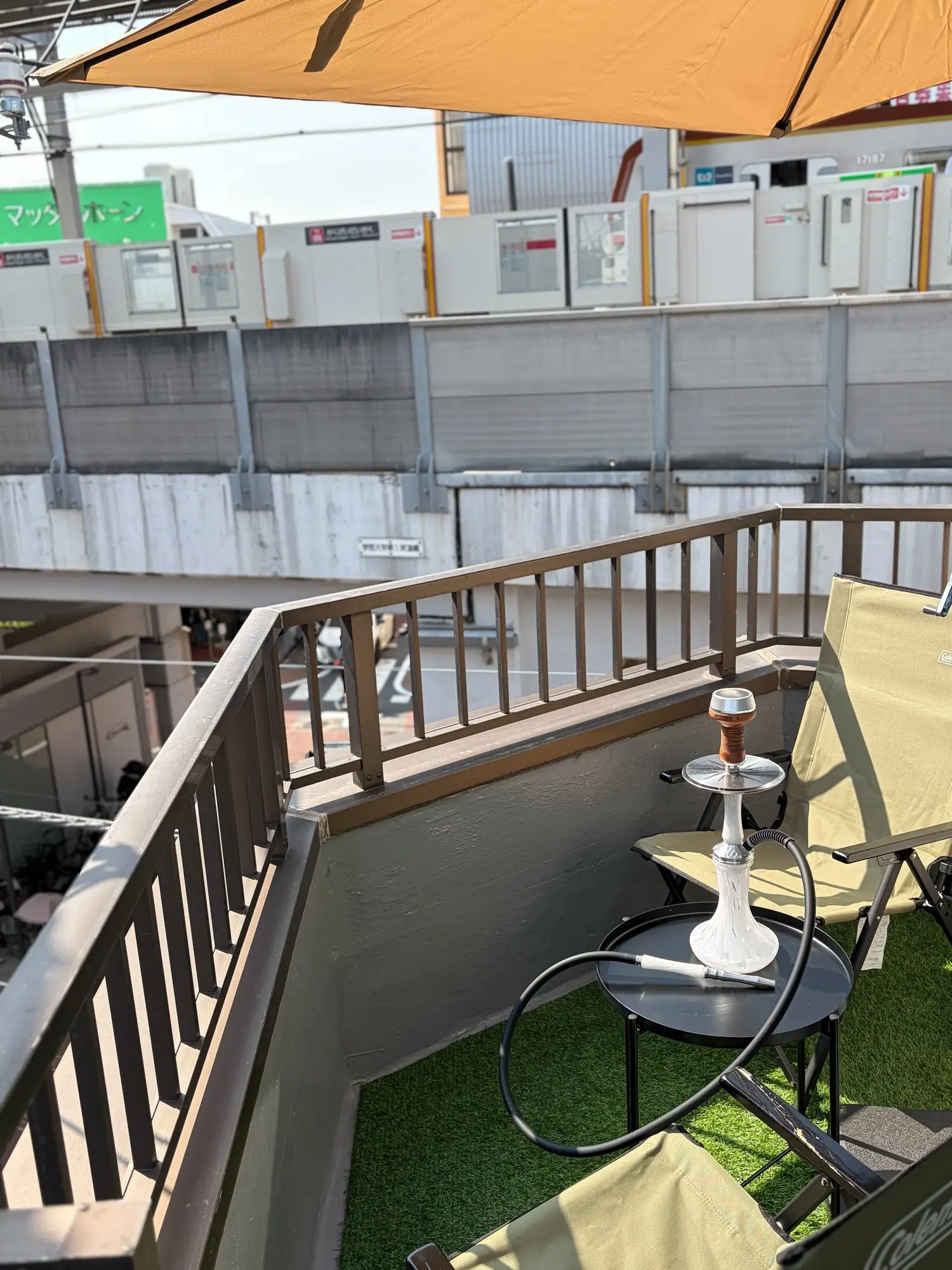
Once you have smoked hookah a few times, you will probably notice the words “dark leaf” on a menu. What is it, how is it different from the flavors you already know, and is it really that much stronger? This guide explains the difference between dark-leaf and blonde-leaf shisha, what the major brands say about their own tobacco, and how to approach dark leaf for the first time, drawing on manufacturers’ official information and public health sources.
What is dark-leaf shisha?
Most shisha is a mixture of tobacco, sweeteners and flavoring, according to the U.S. Food and Drug Administration (FDA). The UK’s National Centre for Smoking Cessation and Training (NCSCT) calls the most common type mo’assel, meaning “honeyed,” after the sticky, sweetened texture of the mixture. The tobacco in that mixture can be broadly divided into two families: blonde leaf and dark leaf.
Dark leaf is a category of hookah tobacco. Fumari explains that dark raw leaves and a dark finished product are not always the same: processing the molasses can also darken the finished tobacco. Check the specific manufacturer and product line rather than judging nicotine content from color alone. Well-known dark-leaf makers include Tangiers in the United States and Darkside in Russia, and both publish descriptions of how strong each of their lines is.
Blonde leaf vs dark leaf
Fumari, a U.S. manufacturer of blonde-leaf shisha, sets out the main differences like this:
| Blonde leaf | Dark leaf | |
|---|---|---|
| Typical leaf | Virginia | Virginia or Burley |
| Curing | Flue-cured (dried with heated air) | Air-cured or fire-cured |
| Color and taste | Lighter color, lighter taste | Darker color, earthier tobacco taste; heavier and more potent |
| Nicotine | Check the specific product and line | Check the specific product and line |
| Longevity | Check the equipment, preparation and heat management | Check the equipment, preparation and heat management |
Washing and strength
One process difference comes up again and again: whether the leaf is washed. Darkside states on its official site that it does not wash its raw material, so that the nicotine content and strength stay at the same level. Tangiers, meanwhile, describes its Birquq line as having “low nicotine content, similar to other unwashed shisha brands.” In other words, “dark” and “unwashed” do not automatically mean “maximum strength”; it depends on the brand and the line.
We could not find public data that compares the nicotine content of dark and blonde leaf with specific figures. Treat broad claims such as “dark leaf is many times stronger” with caution, and read each brand’s own description of each line instead.
Major dark-leaf brands
Tangiers (USA)
Tangiers says its tobacco has been handmade at its own facility in Phoenix, Arizona, since 2000. On its official site it describes the original Noir line as medium in nicotine, Birquq as low in nicotine, and Burley as having the highest nicotine content, adding that Burley is not recommended for beginners. It also makes a caffeine-infused F-Line.
Darkside (Russia)
Darkside describes itself as the largest Russian manufacturer of hookah tobacco. Its flagship DARKSIDE line is a blend of Virginia and Burley, made from unwashed leaf and described as medium strength, with high heat resistance. The company also produces several other lines at different strength levels: its official site lists SHAKE as below average, XPERIENCE as medium, SABOTAGE as high, and STARLINE as an entry-level line. The name on the tin is therefore only half the story; the line matters just as much.
Mezza
Mezza’s official site describes its tobacco as based on high-grade Burley.
For comparison: blonde-leaf brands
Well-known blonde-leaf brands include Fumari (USA) and Al Fakher, founded in 1999 in the United Arab Emirates.
What to know before you smoke dark leaf
Bowls
There are two common bowl designs. An Egyptian bowl has several holes in the base; a phunnel bowl has a single raised hole in the center. Fumari says Egyptian bowls suit traditional, drier tobacco, while phunnel bowls suit juicier modern blends because the juice collects in the dish instead of running down the stem. Kaloud adds that phunnel bowls handle direct heat well, need less charcoal, give a longer session and make overpacking less likely.
Heat management
Charcoal heat is controlled either with foil or with a heat-management device that sits on top of the bowl. Kaloud describes its Lotus device as holding the charcoal above the shisha so that heat can be controlled precisely, replacing foil. Fumari notes that overheating either type of tobacco makes the smoke harsh on the throat, while Darkside promotes its own tobacco’s heat resistance.
It is worth quoting Kaloud’s own warning here: heat management does not make hookah smoking safe or reduce its health risks.
Packing
How tightly the bowl is packed also changes the experience. Japan Shisha Times, a Japanese specialist publication, notes that dark leaf is often packed relatively densely to soften its strength. If you are smoking at a lounge, packing and coal placement are best left to the staff.
How to choose your first dark leaf
- If you are new to hookah altogether, start with blonde leaf. The differences in dark leaf are easier to appreciate once you know what a regular session feels like.
- If you are comfortable with blonde leaf, start with a line that its maker describes as low or medium strength. Tangiers, for example, positions Noir as medium and Birquq as low, and says Burley is not for beginners.
- If you want to ease in, some lounges will mix blonde and dark leaf in one bowl. Ask the staff whether they offer this.
- Put how you feel first. Avoid smoking on an empty stomach or after heavy drinking, take slow breaks between puffs, and stop at once if you feel light-headed.
Reading a dark-leaf menu
When a lounge lists dark leaf, you will usually see up to three pieces of information: the brand, sometimes the line, and the flavor. Since strength can vary by line even within one brand, the line is often the most useful clue. If the menu doesn’t show it, ask the staff which option is milder. It is also worth checking whether dark leaf is priced as a separate item or as an add-on to a regular hookah, as menus differ.
FAQ
Can beginners smoke dark leaf?
They can, but dark leaf is generally described as stronger in taste and nicotine than blonde leaf. It may be easier to appreciate once you are used to blonde leaf.
Is there nicotine-free dark leaf?
No. Dark leaf is tobacco, so it contains nicotine. If you want to avoid nicotine, choose a tobacco-free, nicotine-free product.
Does the water make dark leaf milder or safer?
No. The U.S. Centers for Disease Control and Prevention (CDC) states that the water in a hookah does not filter the smoke.
Is dark leaf the same as “unwashed” tobacco?
Not always. Darkside says it does not wash its leaf, and Tangiers refers to “other unwashed shisha brands.” Check each brand’s description rather than assuming.
Rules and health facts
The rules in Japan
In Japan, smoking is prohibited for anyone under 20. On top of that, the Health Promotion Act (in force since April 2020) states, in the government’s official English translation, that the manager of a facility with a smoking room “must not allow persons under 20 years of age to enter the smoking room,” and applies the same rule to smoking lounges. Under-20s therefore cannot join a hookah session in Japan at all.
Health facts
Public health agencies are clear that hookah, including dark leaf, is not a safe choice:
- Hookah smoke contains nicotine, tar and heavy metals, and the water does not filter it (CDC).
- The charcoal can produce high levels of carbon monoxide, metals and cancer-causing chemicals (CDC).
- Because a session is long, the volume of smoke is large: the CDC estimates that an hour-long session involves inhaling around 90,000 ml of smoke, compared with 500 to 600 ml for a single cigarette, and exposure to nearly nine times as much carbon monoxide.
- The FDA’s position is that there is no safe tobacco product.
- The WHO Regional Office for the Eastern Mediterranean states that one bowl of unflavored waterpipe tobacco can contain as much nicotine as 2 to 12 cigarettes, and that waterpipe tobacco is highly addictive.
Whatever you smoke, stop immediately if you develop a headache, nausea or dizziness, and get some fresh air.
Summary
- Dark leaf uses darker tobacco. It is generally described as richer and higher in nicotine than blonde leaf.
- The main differences are the leaf type and how it is cured. Some brands say they deliberately leave their leaf unwashed.
- Major brands include Tangiers and Darkside. Strength varies from line to line, even within one brand.
- Overheating makes any shisha harsh. Heat management does not make hookah safe.
- Under-20s cannot smoke hookah in Japan. Put how you feel first, and stop if you feel unwell.
New to hookah? Start with What Is Hookah (Shisha)? A Beginner’s Guide to Trying It in Japan.
How it works at shisha bar IORI (Gakugei-daigaku, Tokyo)
- Dark leaf from three brands, added to any shisha (¥2,800 per pipe): DARKSIDE +¥800, MEZZA +¥600, JENT +¥1,200
- Half mixes with blonde leaf are available
- The full list of dark-leaf flavors is in our in-store mobile ordering system (English supported)
- Ages 20+ only; cashless payment only
References
- Fumari, “Blonde Leaf vs. Dark Leaf Hookah Tobacco: What’s the Difference?”
- NCSCT, “Waterpipe tobacco smoking: briefing”
- Fumari, “Egyptian Hookah Bowls vs Phunnel”
- Darkside (official site)
- Tangiers (official site)
- Mezza (official site)
- Al Fakher (official site)
- Kaloud, “Egyptian vs Phunnel Bowl”
- Kaloud, “Kaloud Lotus”
- Kaloud (official site)
- Japan Shisha Times (Japanese)
- U.S. Food and Drug Administration, “Hookah Tobacco (Shisha or Waterpipe Tobacco)”
- Centers for Disease Control and Prevention, “Hookahs”
- WHO Regional Office for the Eastern Mediterranean, “Tobacco Free Initiative fact sheet: waterpipe tobacco smoking”
- Japanese Law Translation, “Health Promotion Act” (official English translation)