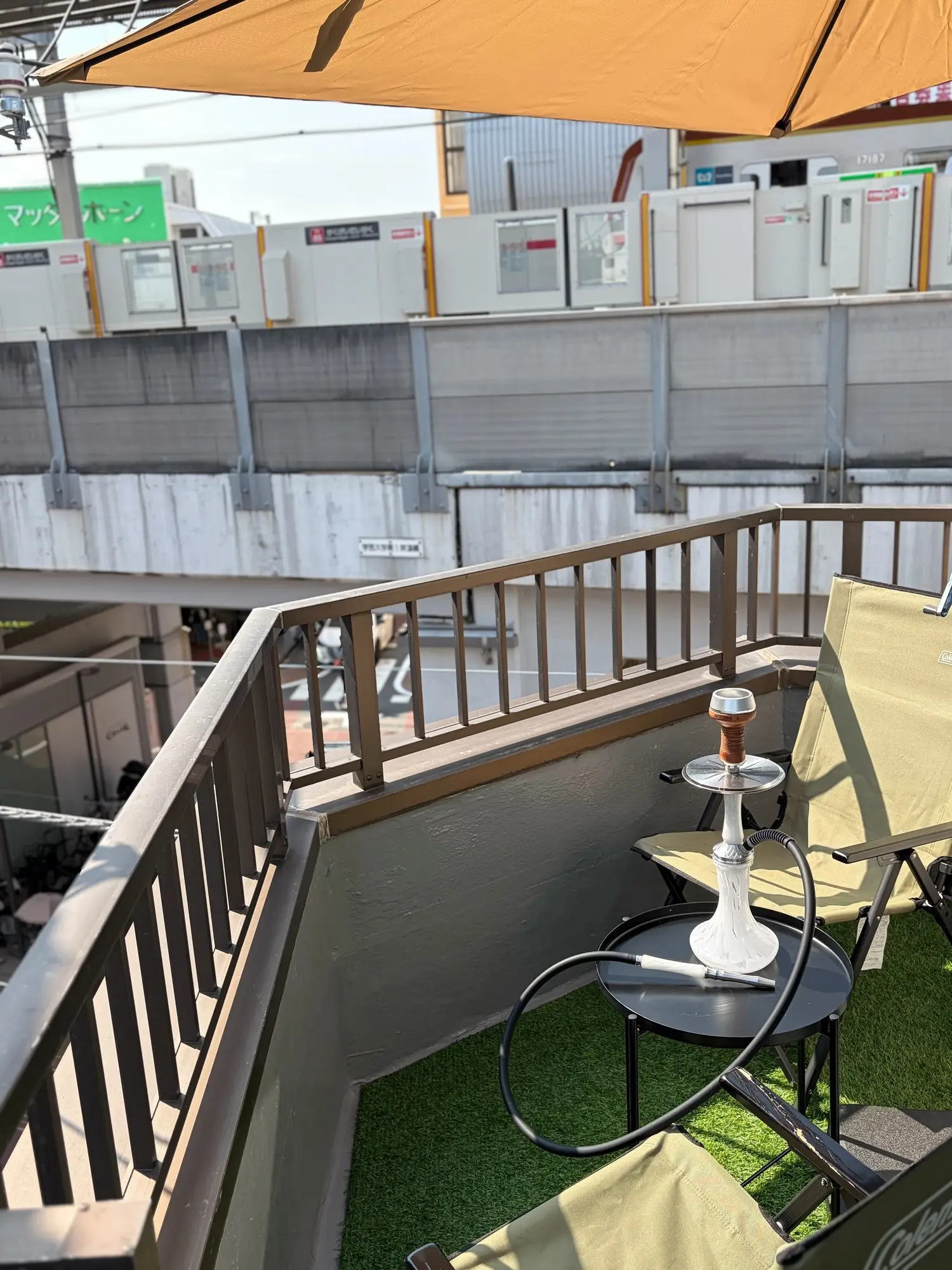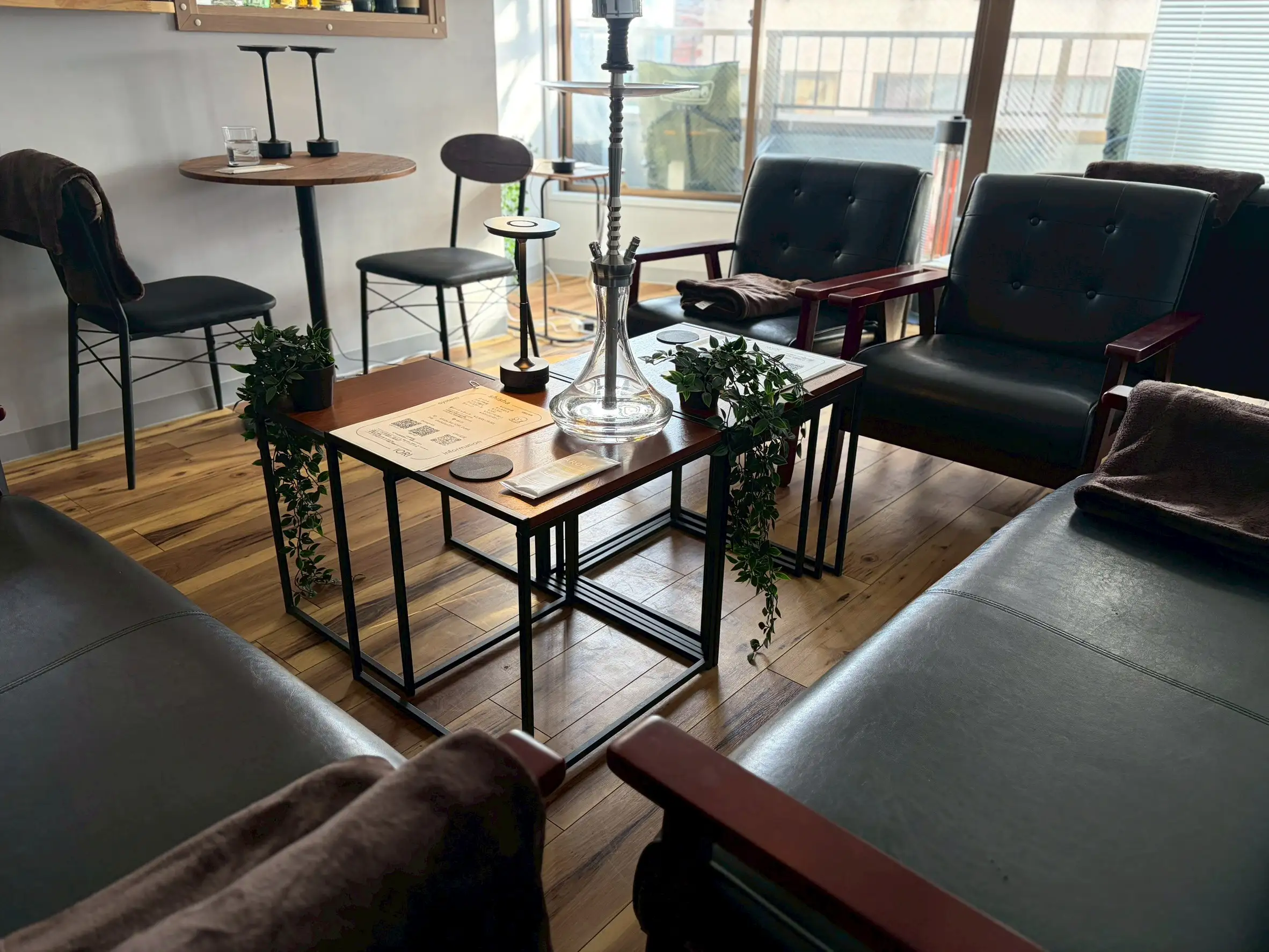
Hookah has boomed in Japan: a 2024 newspaper report counted more than 1,600 shisha lounges nationwide, with more of them in Tokyo than Starbucks stores.1 But if you have never smoked a hookah before, the basics can be confusing: What exactly are you smoking? How long does a session take? Why is there a seat charge? And what are the local rules? This guide answers those questions using public health agencies, official legal texts and manufacturers’ own explanations, so you know what to expect before you walk in. Sources are listed in the footnotes.
What is hookah (shisha)?
A hookah is a water pipe used to smoke flavored tobacco (or a tobacco-free substitute). Charcoal heats the flavored mixture in a bowl at the top; the heated air passes through the tobacco mixture and ultimately through a water-filled base, and the resulting smoke is inhaled through a hose.2
The same device goes by many names. “Hookah” is common in North America, “shisha” in the UK, the Middle East and Japan, and you may also see “narghile,” “argileh” or “goza.” In Japanese it is シーシャ (shisha) or 水たばこ (mizu-tabako, literally “water tobacco”).
Where does it come from?
Nobody knows exactly. Waterpipe smoking is thought to date back at least four centuries in Africa and Asia.3 One common account places its origins in northern India, from where it spread to Persia, the Ottoman Empire and North Africa, but its exact beginning is uncertain.4
The names themselves carry some history. “Hookah” is said to come from an Arabic word for a vase or casket, while “narghile” derives from an Indian word for the coconut palm, because the first water vessels were made from coconut shells.5
For the full story, from its origins to Japan’s shisha boom, see The History of Hookah.
How a hookah works
A hookah has only a handful of parts:
| Part | What it does |
|---|---|
| Bowl | Holds the flavored tobacco or herbal mixture |
| Heat management | Sits between the coals and the bowl; foil or a dedicated device |
| Charcoal | The heat source |
| Stem | The central column connecting the bowl to the base |
| Base (vase) | Holds the water |
| Hose and mouthpiece | What you inhale through |
When you draw on the hose, air is pulled across the hot coals, through the flavored mixture, down the stem, through the water and up into the hose. Bowls come in different styles: traditional “Egyptian” bowls with several holes suit drier tobacco, while “phunnel” bowls with a single raised hole suit juicier modern blends.6 Heat-management devices such as the Kaloud Lotus replace foil and let the preparer control heat more precisely.7
For each part and what it does, see Parts of a Hookah.
Not to be confused with electronic devices: see E-Hookah vs Hookah.
Types of flavor
Most hookah mixtures are tobacco combined with sweeteners and flavoring.2 The most common type is called mo’assel, meaning “honeyed.”4 Within that, you will usually meet three broad categories:
- Blonde leaf. Made with lighter, flue-cured tobacco, it is described as lighter in color and taste.6
- Dark leaf. Made with darker air-cured or fire-cured tobacco, it is described as heavier and more potent, with a higher nicotine content than blonde.6 Some brands, such as Darkside, describe deliberately leaving the leaf unwashed to preserve its strength.8
- Nicotine-free (herbal). These products replace tobacco with plant fiber or porous stones soaked in glycerin and flavoring. They contain no nicotine, but they are still heated with charcoal and still produce smoke (see the health section below).
Some brands flag their strongest lines as unsuitable for newcomers (Tangiers’ Burley line is one example),9 so a blonde-leaf or nicotine-free flavor is a gentler place to start.
For flavor families, mixing ratios and classic combinations, see Hookah Flavors for Beginners: Categories, Classic Mixes and How to Order.
For how hookah compares with cigarettes, heated tobacco and vapes, see Hookah vs Cigarettes, Heated Tobacco and Vapes.
How a session works
Ordering
At a lounge you choose a flavor from the menu, and the staff prepare the hookah and bring it to your table with the coals already lit. If you can’t decide, tell the staff what you usually like to eat or drink; it is a simple way to narrow down the choice.
If a menu term is unfamiliar, the Hookah Glossary explains 40 of them, including Japanese words like toppu-gae.
Smoking
Hold the mouthpiece gently and draw slowly, a little like sipping through a straw. Pull too hard or too often and the mixture overheats, which makes the smoke harsh.6 Take a breath between puffs and let the bowl recover. If the smoke is thin or tastes harsh, see How to Smoke Hookah Properly.
Coal changes
The coals burn down as you smoke, and staff come by to replace them. Coal changes usually happen every 15 to 20 minutes and are generally free.10 Don’t touch the bowl or the coals yourself; if the smoke gets thin or the taste changes, just ask.
For coal types, coal changes and why most carbon monoxide comes from the charcoal, see Hookah Charcoal Explained.
How long it takes
A typical hookah session lasts about an hour,11 and a lounge visit typically runs one and a half to two hours,10 so plan for an unhurried evening rather than a quick stop. How Long Does a Hookah Session Last? explains what affects the timing.
How pricing usually works in Japan
Exact prices vary from lounge to lounge, but a bill in Japan is usually built from the same parts:10
- The hookah itself. A charge per pipe.
- Seat charge. A per-person table or cover charge, which may depend on the time of day.
- Drinks. Some lounges have a one-drink minimum per guest.
- Share fee. An extra fee when more people share one pipe than the lounge allows.
- Flavor change. Swapping in a fresh bowl costs less than ordering a new hookah.
Before you sit down, it is worth checking two things on the menu: whether there is a seat charge (and when it applies), and how many people can share one pipe.
Etiquette
- Don’t pull or yank the hose. The pipe can tip over.
- Leave the coals and bowl to the staff. They are extremely hot.
- Think before sharing a hose. Users can breathe in bacteria living in the hose,2 and the risks of sharing include colds, influenza and other infections.12
- Stop if you feel unwell. Headache, dizziness or nausea are signals to put the hose down, get some fresh air and tell the staff.
For more on sharing one pipe as a group, see Sharing a Hookah.
Japan-specific rules
The age limit is 20, not 18 or 21
In Japan, smoking is prohibited for anyone under 20 under a law dating back to 1900.13 Visitors are subject to the same rule.
For the laws behind the 20+ rule, ID and what it means for groups and visitors, see Hookah Age Limit in Japan.
Under 20s cannot even enter smoking areas
Japan’s Health Promotion Act, amended with full effect from April 2020, goes further. In the official English translation, Article 33 states that the manager of a facility with a smoking room “must not allow persons under 20 years of age to enter the smoking room,” and Article 35 applies the same rule to smoking lounges.14 This applies even when the person does not intend to smoke, and to employees as well as customers.15
Because hookah is smoked in a smoking area, this means under-20s cannot join a hookah session at all, even if they order only a nicotine-free flavor or a soft drink. Families and groups with someone under 20 should plan accordingly.
“Tobacco” includes substitutes
The same law defines “tobacco” to include not only manufactured tobacco but also “a manufactured tobacco substitute,” and “smoking” as lighting or heating tobacco to generate smoke or vapor for inhalation.14
Carry photo ID
Because of the age limit, it is sensible to carry photo ID. For visitors, a passport is the most reliable option.
Health facts
Hookah is often assumed to be gentler than cigarettes because the smoke passes through water. The evidence says otherwise.
- Water does not filter the smoke. The water in a hookah does not filter smoke, and hookah smoke contains nicotine, tar and heavy metals.11
- Charcoal adds its own toxicants. The charcoal can produce high levels of carbon monoxide (CO), metals and cancer-causing chemicals.11
- There is no safe tobacco product. No tobacco product is considered safe, and hookah smoking is linked to several cancers and lung disease.2
- Carbon monoxide is a real risk. A March 2025 public warning about CO poisoning at hookah venues listed headache, nausea and loss of consciousness as symptoms and urged good ventilation.16
- Pregnancy. Babies born to women who used a hookah daily during pregnancy weighed less at birth and were more likely to have respiratory problems.11
- Nicotine-free does not mean smoke-free. A 2012 study comparing tobacco and tobacco-free hookah products found that carbon monoxide, tar and other toxicants were substantial in both, and that nicotine was the only major difference.17
For common myths and how to read “how many cigarettes” figures, see Is Hookah Dangerous? Risks, Myths and How to Reduce Them. If you feel unwell during a session, see Feeling Sick After Hookah? for what to do.
Before you go: a quick checklist
- Check everyone’s age. If anyone in your group is under 20, they will not be able to join, even for nicotine-free hookah.
- Bring photo ID. A passport is the safest choice for visitors.
- Read the pricing rules. Look for the seat charge, how many people can share one pipe, and whether there is a drink minimum.
- Budget your time. Plan for about an hour per hookah and up to two hours for the visit.
- Choose a well-ventilated place. Ventilation is important to prevent carbon monoxide poisoning.16
- Go easy. Avoid smoking on an empty stomach or after heavy drinking, and stop as soon as you feel unwell.
For what to wear, what to bring and how a visit works, see Your First Hookah Bar Visit in Japan.
FAQ
Can I try hookah if I don’t smoke cigarettes?
Many people do, but remember that you are still inhaling smoke and carbon monoxide, even with nicotine-free flavors. Take it slowly and stop if you feel unwell. Planning to go on your own? See Going to a Hookah Lounge Alone.
Is a nicotine-free hookah allowed for under-20s in Japan?
No. The Health Promotion Act bars under-20s from entering smoking areas, regardless of what is being smoked.
Does the water make it safer?
No. The water does not filter the smoke.11
Should a beginner try dark leaf?
It is generally described as stronger and higher in nicotine than blonde leaf,6 and at least one major brand (Tangiers) labels its strongest line as not for beginners.9 Start with blonde leaf and try dark leaf once you know what you like.
How long should I plan for?
A single session runs about an hour, and a lounge visit often lasts one and a half to two hours.
Summary
- A hookah heats a flavored mixture with charcoal and draws the smoke through water.
- Flavors fall into blonde leaf, dark leaf and nicotine-free types.
- Staff handle the coals; a session lasts about an hour.
- Bills in Japan usually combine a per-pipe price, a seat charge and drinks.
- Under-20s cannot enter smoking areas in Japan, even for nicotine-free hookah.
- Water does not filter the smoke; watch for signs of carbon monoxide exposure.
How it works at shisha bar IORI (Gakugei-daigaku, Tokyo)
- 30 seconds from the east exit of Gakugei-daigaku Station, about 7 minutes from Shibuya on the Tokyu Toyoko Line (local trains)
- We ventilate the room thoroughly and check indoor carbon monoxide levels regularly with a CO monitor
- 150+ flavors, including 36 nicotine-free; English menu available
- ¥2,600 per pipe; the seat charge is set by arrival time: ¥400 until 6 PM, ¥800 from 6 PM (included in the Day Sets)
- A late-night fee of 10% applies to orders from 22:00 (excluding the table charge)
- Ages 20+ only; cashless payment only
Menu & prices · How our prices work · Flavor Finder · Access
Footnotes
-
U.S. Food and Drug Administration (FDA): Hookah Tobacco (Shisha or Waterpipe Tobacco) ↩ ↩2 ↩3 ↩4
-
World Health Organization (WHO): Advisory note: waterpipe tobacco smoking, 2nd edition ↩
-
National Centre for Smoking Cessation and Training (NCSCT, UK): Waterpipe tobacco smoking: briefing ↩ ↩2
-
Fumari (U.S. hookah tobacco maker): Blonde Leaf vs. Dark Leaf Hookah Tobacco / Egyptian Hookah Bowls vs Phunnel ↩ ↩2 ↩3 ↩4 ↩5
-
Kaloud (hookah equipment maker): Kaloud Lotus ↩
-
Darkside: Official site ↩
-
Tangiers: Official site ↩ ↩2
-
Japan Shisha Times (Japanese specialist publication): Guide to enjoying a shisha café (Japanese) ↩ ↩2 ↩3
-
U.S. Centers for Disease Control and Prevention (CDC): Hookahs ↩ ↩2 ↩3 ↩4 ↩5
-
Stanford Medicine Tobacco Prevention Toolkit: Hookah Crash Course ↩
-
e-Gov Law Search: Act on the Prohibition of Smoking by Minors (Japanese) ↩
-
Ministry of Justice, Japanese Law Translation: Health Promotion Act (official English translation) ↩ ↩2
-
Ministry of Health, Labour and Welfare (MHLW): Passive smoking prevention site (Japanese) ↩
-
Tokyo Metropolitan Government: Press release, March 2025 (Japanese) ↩ ↩2
-
Shihadeh A, et al.: Food and Chemical Toxicology, 2012 ↩