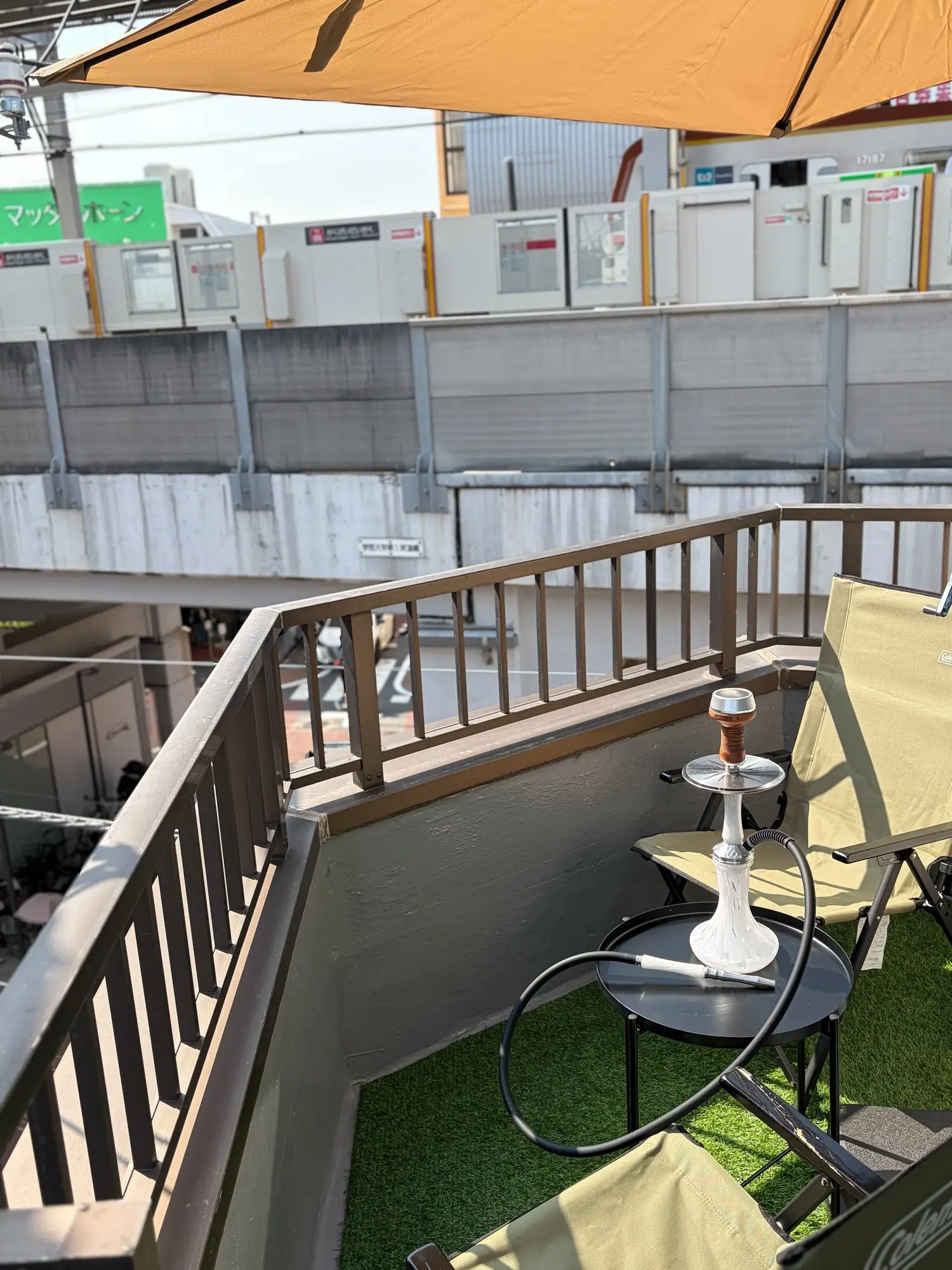
Hookah lounges are now a familiar sight in Tokyo and other Japanese cities, but the water pipe itself goes back centuries. This guide traces where hookah came from, where its many names originate, how it spread around the world, and how it became part of café culture in Japan, drawing on published research, public health bodies and a historical encyclopedia. Along the way, it explains why today’s hookah, with its sweet fruit and mint flavors, looks quite different from the water pipes of the past.
Who invented the hookah?
No single inventor can be named with certainty. The World Health Organization (WHO) says waterpipe smoking has been practiced in Africa and Asia for at least four centuries, and Japan Shisha Times says that nothing is certain about its origins and that there are several theories. The best-known account credits a physician named Hakim Abul Fath in India, as described in a study citing WHO material, but it is a traditional story rather than settled history. The sections below look at each of these points in turn.
Origins: at least four centuries old
The World Health Organization (WHO) says waterpipe smoking has been practiced in Africa and Asia for at least four centuries.
Exactly where it began is not clear. Japan Shisha Times, a Japanese specialist publication, says that nothing is certain about its origins and that there are several theories.
One widely told account places its invention in India. A study citing WHO material describes the water pipe as having been devised in India by a physician named Hakim Abul Fath. This is best treated as one of several traditional accounts rather than settled history.
Where the names come from
The water pipe goes by many names. A 2004 research paper lists “narghile,” “arghile,” “shisha,” “hookah,” “goza” and “hubble bubble” among them.
| Name | Origin |
|---|---|
| Shisha | From a Persian word meaning “glass” (Japan Shisha Times) |
| Hookah | From an Arabic word meaning “vase” or “casket” (1911 Encyclopædia Britannica) |
| Narghile | From a word for the coconut palm, because the first water vessels were coconut shells (1911 Encyclopædia Britannica) |
| Hubble-bubble | From the bubbling sound of the water (1911 Encyclopædia Britannica) |
The 1911 Britannica describes the water pipe as common in India, Egypt and “the East” generally. In Japan, it is usually called シーシャ (shisha) or 水たばこ (mizu-tabako, “water tobacco”).
Why the water? A note on the design
The basic design has changed little: charcoal heats the tobacco, and the smoke is drawn through water before it reaches the smoker. The 1911 Britannica described the smoke as being “cooled” by passing through the water. Modern public health agencies are clear, however, that the water does not clean the smoke: the U.S. Centers for Disease Control and Prevention (CDC) states that “the water in a hookah does not filter smoke.”
A habit in decline
For much of the 20th century, hookah was fading. A 2015 analysis of the global spread of waterpipe smoking, published in the journal Tobacco Control, describes use before the 1990s as declining and increasingly confined to older men. An earlier 2004 paper by some of the same researchers went further, describing waterpipe smoking as a “re-emerged strain” in the global tobacco epidemic, a sign of how sharply the trend had reversed.
The 1990s: flavored tobacco goes global
That changed in the early 1990s. The same analysis says waterpipe smoking began spreading among young people, first in the Middle East and soon afterwards in other parts of the world. It identifies four main drivers:
- Flavored tobacco (maassel). Tobacco fermented with molasses, glycerine and fruit essence, with a sweet aroma. Earlier waterpipe tobacco had been raw and harsh.
- Café culture. Waterpipe cafés became places where young people gathered.
- Mass media. Media helped spread the image of the waterpipe.
- Weak regulation. Waterpipe smoking faced few rules.
The analysis also notes that cafés opened by Middle Eastern expatriates helped carry the habit abroad, and it cites about 400 waterpipe cafés in London alone. The sweet fruit and mint flavors that dominate hookah today are closely tied to this spread of flavored tobacco.
What maassel is
Maassel (also written mu’assel or mo’assel) is the moist, sweetened tobacco used in most hookahs today. The UK’s National Centre for Smoking Cessation and Training (NCSCT) describes mo’assel, meaning “honeyed,” as the most common type. Japan Shisha Times describes shisha flavors as tobacco leaves steeped in a flavored syrup, which is why today’s menus can list everything from grape and mint to dessert-style flavors.
How it reached the West
The 2015 analysis notes that Middle Eastern expatriates opened waterpipe cafés in other countries, carrying the culture with them. It also points to Ramadan tents in the 1990s as an important moment in the spread of waterpipe café culture among young people in the Middle East.
A short timeline
| When | What happened |
|---|---|
| At least four centuries ago | Waterpipe smoking practiced in Africa and Asia (WHO) |
| Early 20th century | The 1911 Britannica describes the hookah as common in India, Egypt and “the East” |
| Before the 1990s | Use declining and increasingly limited to older men (Maziak et al., 2015) |
| Early 1990s | Flavored maassel and café culture spread waterpipe use among young people, first in the Middle East, then worldwide (Maziak et al., 2015) |
| 2024 | Nikkei reports more than 1,600 shisha shops across Japan |
| 2025 | Tokyo counts 437 specialist shisha shops in the city |
Hookah in Japan
In Japan, hookah has become popular with younger generations.
- Nikkei, October 2024: under the headline “Second stop? Shisha is fine” (2軒目、シーシャでいいよね), the business daily reported that shisha shops had passed 1,600 nationwide, with more of them in Tokyo than Starbucks stores.
- Tokyo Metropolitan Government, March 2025: counted 437 specialist shisha shops in Tokyo, based on the number listed on search sites as of 13 March 2025.
- Gendai Business, May 2024: described shisha spreading among young people since the COVID-19 pandemic, with shisha cafés used as places to sit and talk, and with the emphasis on relaxing time spent smoking (so-called “chill”) rather than the smoking itself.
What it’s called in Japan
In Japan, the most common word is シーシャ (shisha), borrowed from the Persian-derived name. The formal Japanese term is 水たばこ (mizu-tabako), literally “water tobacco,” which is the word used by government bodies such as the Tokyo Metropolitan Government and the Consumer Affairs Agency.
For other Japanese words you may see on a menu, see the Hookah Glossary.
What Japanese shisha café culture looks like
For visitors, a few features of Japanese shisha cafés stand out, all described in the sources above and by Japan Shisha Times:
- A place to hang out. Shisha cafés are used as somewhere to sit and talk, work or read, often for an hour or two.
- Staff handle the coals. Coal changes roughly every 15 to 20 minutes are part of the service.
- The age limit is 20. Under-20s cannot enter smoking areas at all in Japan, even if they don’t smoke. See Hookah Age Limit in Japan.
History aside: what to know today
However long its history, hookah is a tobacco product. The same 2015 analysis names weak regulation, alongside flavored tobacco and café culture, as one of the drivers of its spread.
- Hookah charcoal produces carbon monoxide (Feeling Sick After Hookah?).
- The water does not filter the smoke (Is Hookah Dangerous?).
- In Japan, hookah is for people aged 20 and over.
FAQ
Which country does hookah come from?
Its exact origin is uncertain. An Indian origin is a well-known account, but the water pipe has long been used across a wide area including Persia, the Middle East and North Africa.
Are “shisha” and “hookah” different things?
No. They are different regional names for the same water pipe.
Have sweet flavors always been part of hookah?
According to research, the spread of flavored tobacco made with molasses, glycerine and fruit essence began in the early 1990s. Before that, raw, harsh tobacco was used.
Does the water cool or clean the smoke?
Historically, the water was described as cooling the smoke (1911 Britannica). But the CDC states plainly that it does not filter the smoke, so it doesn’t make hookah safer.
Is hookah legal in Japan?
Yes, for adults aged 20 and over, in places where smoking is permitted under Japan’s Health Promotion Act. Under-20s may not enter smoking areas at all.
When did hookah become popular in Japan?
News reports describe a boom among younger people in recent years, with Gendai Business pointing to growth since the COVID-19 pandemic and Nikkei reporting more than 1,600 shops nationwide in 2024.
Summary
- Waterpipe smoking has been practiced in Africa and Asia for at least four centuries (WHO).
- Its exact origin is uncertain; an Indian origin is a well-known account.
- Shisha, hookah and narghile are regional names for the same thing.
- Flavored tobacco and café culture spread it among young people worldwide from the 1990s.
- In Japan, shisha cafés have boomed in the 2020s, with over 1,600 shops reported nationwide.
- In Japan it is usually called シーシャ (shisha) or, formally, 水たばこ (mizu-tabako).
- Whatever its history, hookah is a tobacco product: the water doesn’t filter the smoke, and in Japan it’s 20+ only.
For the basics, read What Is Hookah (Shisha)? A Beginner’s Guide to Trying It in Japan.
How it works at shisha bar IORI (Gakugei-daigaku, Tokyo)
- 150+ flavors, including Japanese-inspired ones such as yuzu, matcha, sakura and roasted sweet potato
- We ventilate the room thoroughly and check indoor carbon monoxide levels regularly with a CO monitor
- Ages 20+ only
References
- World Health Organization, “Advisory note: waterpipe tobacco smoking”
- 1911 Encyclopædia Britannica, “Hookah”
- Maziak W, et al. Tobacco smoking using a waterpipe: a re-emerged strain in a global epidemic. Tobacco Control, 2004
- Maziak W, et al. The global epidemiology of waterpipe smoking. Tobacco Control, 2015
- Study on shisha in Nigerian media, citing WHO material (PMC6662787)
- Japan Shisha Times, shisha basics (Japanese)
- Japan Shisha Times, guide to enjoying a shisha café (Japanese)
- Nikkei, 14 October 2024 (Japanese)
- Tokyo Metropolitan Government press release, March 2025 (Japanese)
- Gendai Business, 28 May 2024 (Japanese)
- NCSCT, “Waterpipe tobacco smoking: briefing”
- Centers for Disease Control and Prevention, “Hookahs”