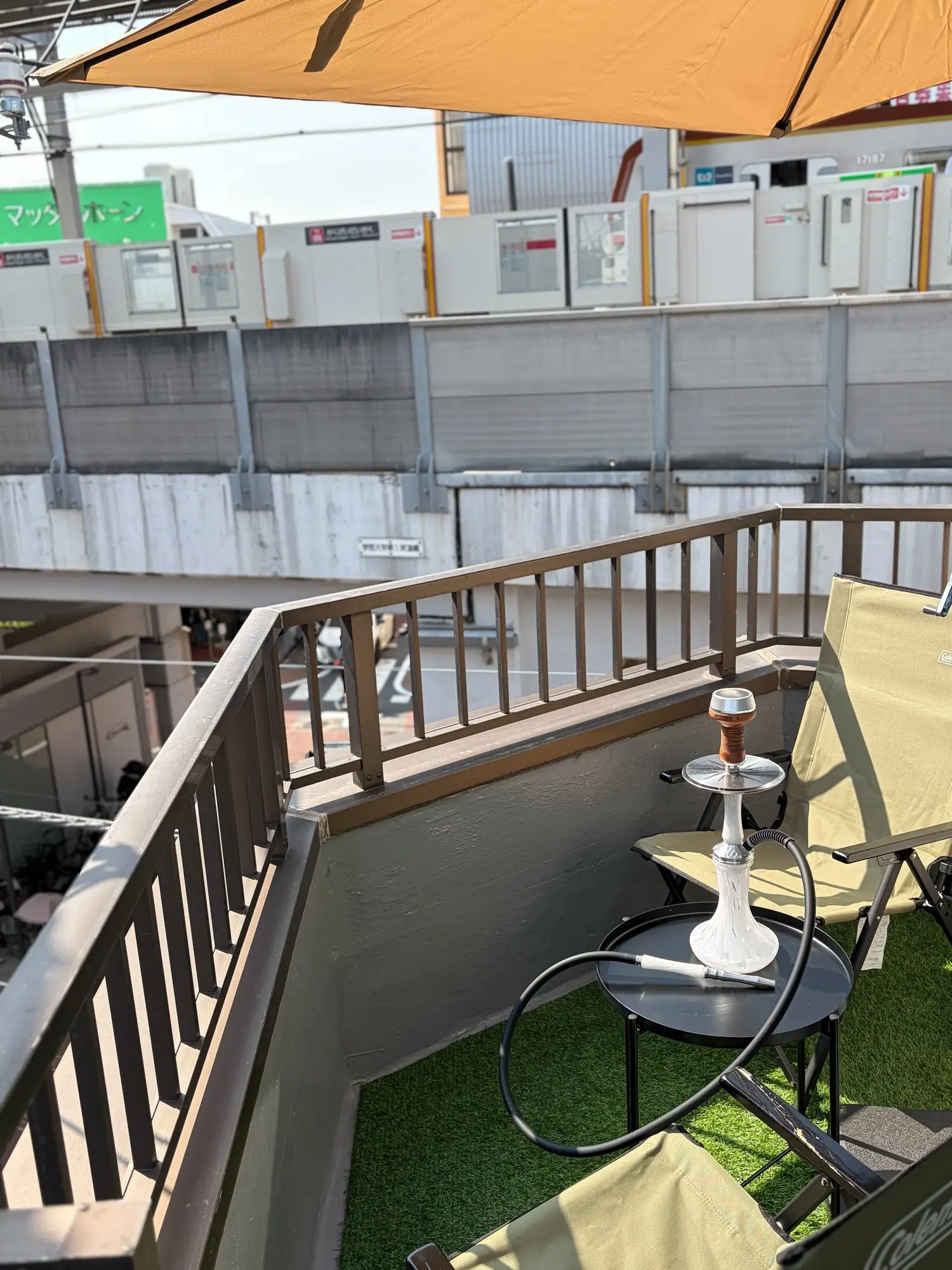
Hookah lounges come with their own vocabulary: “HMD,” “phunnel,” “purge” and more. In Japan there is another layer on top, because lounges use Japanese words such as トップ替え (toppu-gae) and 炭替え (sumi-gae) on their menus and in conversation. This glossary explains 40 terms across equipment, charcoal, flavors, ordering and pricing, and smoking and safety, based on manufacturers’ official information and specialist media. Japanese terms are shown in Japanese script with romaji and an English meaning, so you can recognize them on a menu. At the end, a quick table collects the Japanese words in one place. Where a term has its own guide, follow the link for more detail.
The basics
Shisha / hookah / water pipe: A device in which flavored tobacco (or a substitute) is heated with charcoal and the smoke is drawn through water and inhaled through a hose, or the practice of smoking one. According to Japan Shisha Times, a Japanese specialist publication, “shisha” comes from a Persian word meaning “glass.” For the basics, see What Is Hookah (Shisha)?.
Hookah: The name used in much of the English-speaking world. According to the 1911 Encyclopædia Britannica, it comes from an Arabic word meaning “vase” or “casket.”
Narghile: A name used in the Middle East and elsewhere. It comes from a word for the coconut palm, because the first water vessels were made from coconut shells. For the history of the names, see The History of Hookah.
シーシャ (shisha) / 水たばこ (mizu-tabako): The two Japanese words you’ll see. Shisha is the everyday word used by lounges; mizu-tabako, literally “water tobacco,” is the formal term used by government bodies.
Equipment
Bowl (トップ, “top”): The bowl that holds the flavor and sits under the charcoal. Japan Shisha Times describes a hookah as made up of the top (bowl), charcoal, pipe (stem), water, bottle and hose, which is why Japanese lounges often call the bowl the “top.”
Clay bowl: A bowl made of clay. US tobacco maker Fumari sells both clay bowls and phunnel bowls.
Phunnel (funnel) bowl: According to Japan Shisha Times, a bowl with a single hole in the center. Equipment maker Kaloud says it lets you smoke longer with fewer coals and makes overpacking less likely.
Egyptian bowl: A bowl with several holes in the bottom. Fumari says it suits drier, traditional tobacco.
Heat management device (HMD / HMS): A device that controls the heat from the charcoal. Japan Shisha Times says it removes the need for foil and gives clearer smoke. In Japan it is often written HMS (heat management system).
Lotus: Kaloud’s heat management device. It holds the charcoal above the flavor, replaces foil, and lets you adjust the heat by opening or closing its lid and vents.
Foil: Aluminum foil stretched over the bowl, with the charcoal placed on top to pass heat to the flavor. Japan Shisha Times lists it among the tools for smoking hookah at home.
Stem (pipe): The main column of the hookah, connecting the bowl to the base.
Downstem: The tube that runs from the stem down into the water, so the smoke passes through the water. Al Fakher suggests filling the base until the water covers about 3 cm (just over an inch) of the downstem.
Diffuser: According to Kaloud, an attachment that breaks one large bubble in the water into many smaller ones.
Base (bottle): The water container at the bottom.
Hose: The tube you inhale through. Al Fakher recommends silicone or disposable hoses for hygiene.
Mouthpiece: The tip at the end of the hose that goes in your mouth.
Grommet: A rubber seal used at the joints. Fumari says grommets prevent air leaks, and Kaloud says a grommet that doesn’t fit properly can cause them.
Purge valve: A valve that lets stale smoke escape from the base.
Tray: The plate below the bowl. Al Fakher lists it among the parts used to build a hookah.
For how the parts fit together and how the smoke flows, see Hookah Parts Explained.
Charcoal
Charcoal (炭, sumi): The heat source for the flavor. Most of the carbon monoxide from hookah comes from the charcoal.
Coconut (natural) charcoal: Charcoal made from coconut shells. Kaloud says it takes about 10 to 15 minutes to light on an electric burner; Fumari gives about 8 to 12 minutes.
Quick-light charcoal: Charcoal made to light fast. According to Kaloud, it contains a lighting agent, often nitrate-based, lights within 60 seconds, and can add the agent’s residue to the smoke at first.
Coal change (炭替え, sumi-gae): Replacing burnt-down charcoal with fresh coals. Japan Shisha Times says lounges do this about every 15 to 20 minutes, often at no charge.
For the types of charcoal and how coal changes work, see Hookah Charcoal Explained.
Flavors
Flavor (フレーバー, furēbā): The flavored tobacco (or tobacco substitute) used in a hookah. Japan Shisha Times describes it as tobacco leaves steeped in a flavored syrup. For flavor families and classic mixes, see the Hookah Flavor Guide.
Maassel (molasses, モラセス): Hookah tobacco. The UK’s National Centre for Smoking Cessation and Training (NCSCT) describes the most common type as mo’assel, meaning “honeyed.” Japanese lounges often simply say モラセス (morasesu, “molasses”).
Blonde leaf: Flavor made with light-colored tobacco leaves. According to Fumari, it uses flue-cured Virginia tobacco and tastes light.
Dark leaf: Flavor made with darker tobacco leaves, generally stronger in taste and higher in nicotine than blonde leaf. See Dark-Leaf Shisha in Tokyo.
Nicotine-free (herbal): Flavor made without tobacco leaves and containing no nicotine, usually plant fiber soaked in glycerin and flavoring. It still produces smoke and carbon monoxide. See Nicotine-Free Shisha in Tokyo.
Steam stones: Porous stones soaked in flavoring, used instead of plant fiber.
Mix (ミックス, mikkusu): Combining two or more flavors. Japan Shisha Times describes it as choosing a combination and working out the ratio.
Packing: Filling the bowl with flavor. Kaloud recommends packing evenly without pressing it down.
Ordering and pricing in Japan
Charge (チャージ, chāji): According to Japan Shisha Times, a seat charge. Some lounges set it by the time you arrive, others by how long you stay.
Share (シェア, shea) / share fee: According to Japan Shisha Times, a fee charged when two or more people share one hookah. How many people can share one pipe differs from lounge to lounge.
Top change (トップ替え, toppu-gae): Replacing the flavor in the bowl with a fresh one. Japan Shisha Times says it is usually cheaper than ordering a new hookah.
Extra flavor (フレーバー追加 / 増量, zōryō): An option to add more flavor, for example to a mix. Whether it’s offered, and the price, depends on the lounge.
For how pricing works as a whole, see How Much Does Hookah Cost in Tokyo?.
Smoking and safety
Purge: Blowing stale smoke out of the base through the purge valve. Al Fakher says purging after several draws keeps the temperature stable and stops the bowl from overheating. For more, see How to Smoke Hookah.
Session: The time spent smoking one hookah. The U.S. Centers for Disease Control and Prevention (CDC) gives about one hour as a typical session.
ヤニクラ (yani-kura): Japanese slang for the dizzy, lightheaded feeling after smoking. It is not a medical term.
Carbon monoxide (CO): A colorless, odorless gas produced by burning charcoal. It can cause headaches, dizziness and nausea. See Feeling Sick After Hookah?.
Age 20: The minimum age for hookah in Japan. Under-20s may not enter smoking areas even if they don’t smoke. See Hookah Age Limit in Japan.
Hookah slang you’ll hear
Some of the terms above come up constantly in conversation at a lounge. Here they are again, in the casual way people use them.
“Purge it”
Blow gently into the hose so the stale smoke escapes from the base through the purge valve. Al Fakher says purging after several draws keeps the temperature stable.
“It’s harsh”
The smoke tastes rough or burnt. Kaloud lists causes such as too much heat, coals bunched in one spot and hard, repeated draws. At a lounge, just tell the staff.
“Session”
The time spent on one hookah. The CDC gives about an hour as a typical session.
“Nicotine rush” / ヤニクラ (yani-kura)
The dizzy, lightheaded feeling some people get from tobacco. It is slang, not a medical term, and dizziness can also be a sign of carbon monoxide, so stop and get fresh air. See Hookah Sickness.
“Top change” / “coal change” (toppu-gae / sumi-gae)
A fresh flavor in the bowl, or fresh coals on top. In Japan you’ll hear the Japanese words on menus and from staff.
Japanese words at a glance
| Japanese | Romaji | Meaning |
|---|---|---|
| シーシャ | shisha | Hookah (everyday word) |
| 水たばこ | mizu-tabako | Hookah (formal word) |
| トップ | toppu | Bowl |
| 炭 | sumi | Charcoal |
| 炭替え | sumi-gae | Coal change |
| フレーバー | furēbā | Flavor |
| モラセス | morasesu | Hookah tobacco (molasses) |
| ミックス | mikkusu | Flavor mix |
| チャージ | chāji | Seat charge |
| シェア | shea | Sharing a pipe / share fee |
| トップ替え | toppu-gae | Top change (fresh flavor) |
| 増量 | zōryō | Extra flavor |
| ヤニクラ | yani-kura | Dizzy feeling after smoking (slang) |
FAQ
What’s the difference between shisha and hookah?
None. They are different regional names for the same water pipe. In Japan, shisha (シーシャ) is the usual word.
What does “toppu-gae” mean on a Japanese menu?
It means replacing the flavor in your bowl with a new one, which Japan Shisha Times says is usually cheaper than ordering a new hookah.
Do I need to ask for a coal change?
At lounges, staff usually change the coals about every 15 to 20 minutes, according to Japan Shisha Times. If the smoke gets thin, you can also ask.
Does “nicotine-free” mean harmless?
No. Nicotine-free flavors still produce smoke and, because of the charcoal, carbon monoxide.
Summary
- The key parts are the bowl, heat management device, stem, base and hose.
- Flavors fall broadly into blonde leaf, dark leaf and nicotine-free.
- In Japanese lounges, you’ll often hear charge, share, toppu-gae and sumi-gae.
- If you don’t know a word, just ask the staff.
How it works at shisha bar IORI (Gakugei-daigaku, Tokyo)
- English menu available in store
- 150+ flavors, including 36 nicotine-free; dark leaf from DARKSIDE, MEZZA and JENT
- Flavor change (new bowl) ¥1,500; extra flavor ¥500
- We ventilate the room thoroughly and check indoor carbon monoxide levels regularly with a CO monitor
- Ages 20+ only
References
- Japan Shisha Times, shisha basics (Japanese)
- Japan Shisha Times, guide to enjoying a shisha café (Japanese)
- Japan Shisha Times, heat management (Japanese)
- Japan Shisha Times, what shapes the taste of shisha (Japanese)
- Japan Shisha Times, home shisha: advanced (Japanese)
- Japan Shisha Times, home shisha: basics (Japanese)
- Kaloud, “Why Does My Hookah Taste Harsh? 7 Causes and Fixes”
- Kaloud, “Best Hookah Charcoal: Coconut vs Quick-Light”
- Kaloud, “Hookah Diffuser”
- Kaloud, “How to Use the Kaloud Lotus I+”
- Kaloud, “Egyptian vs Phunnel Bowl”
- Fumari, “Hookah Coal Buying Guide”
- Fumari, “How to Set Up a Hookah”
- Fumari, “Egyptian Hookah Bowls vs Phunnel”
- Al Fakher, “Build Your Shisha”
- NCSCT, “Waterpipe tobacco smoking: briefing”
- Centers for Disease Control and Prevention, “Hookahs”
- 1911 Encyclopædia Britannica, “Hookah”