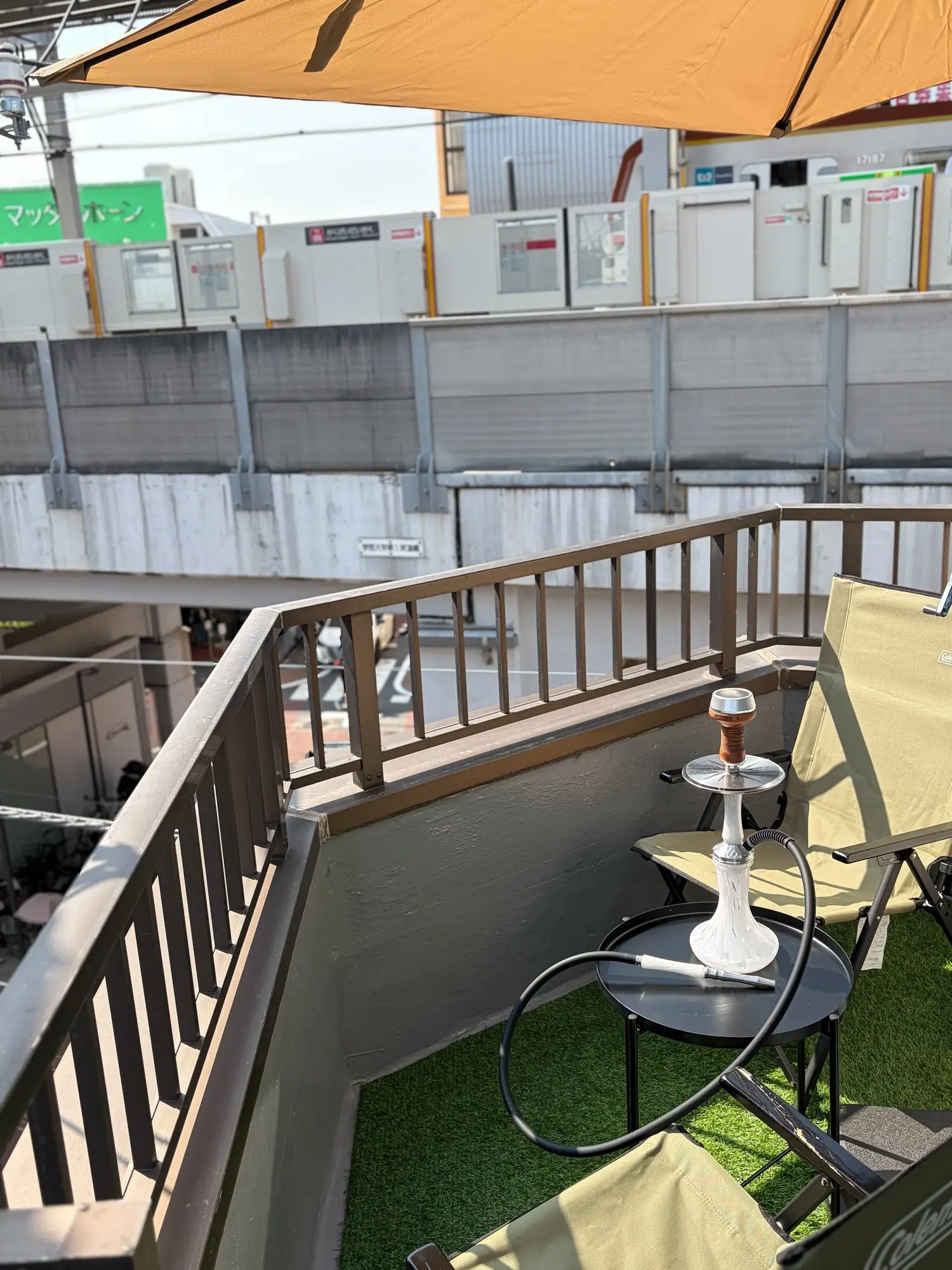
“I can barely get any smoke.” “It suddenly tastes harsh.” If you’ve had either experience, you’re not alone. How a hookah tastes and how much smoke it gives depends on three things working together: the way you draw, the heat from the charcoal, and the flow of air through the pipe.
This guide covers the basic technique, the most common causes of thin smoke and harsh taste, how to ask for help at a lounge, and a few things to avoid. It draws on guidance from hookah accessory and tobacco manufacturers and a Japanese specialist publication.
The basic technique
Draw slowly and steadily
Hookah isn’t smoked in short, sharp pulls like a cigarette. Japan Shisha Times, a Japanese specialist publication, notes that lounge staff sometimes describe the right draw as being like sucking a milkshake through a straw: slow, steady and gentle.
Kaloud, a U.S. maker of hookah accessories, also advises drawing slowly and deliberately. Hard draws pull extra oxygen across the coals and cause sudden spikes in heat.
Pace yourself
Japan Shisha Times suggests that beginners take about two draws a minute, and warns against going above three a minute. After each draw, breathe out slowly and let the flavor linger. Spacing out your draws keeps the flavor going for longer than drawing again and again.
Start with short puffs
Al Fakher describes starting a fresh bowl with a series of short puffs once it has warmed up, to get the smoke going. At a lounge, the staff usually bring the hookah to your table ready to smoke.
Why the smoke is thin
Thin smoke almost always comes down to one of two things: not enough heat or an air leak.
1. Not enough heat
Kaloud explains that insufficient heat produces thin smoke. The coals may simply be burning out. Japan Shisha Times notes that thinning smoke is the signal that it’s time to change the coals.
For coal types, coal changes and why most carbon monoxide comes from the charcoal, see Hookah Charcoal Explained.
2. An air leak somewhere
According to Kaloud, badly fitted or loose rubber seals (grommets) at the joints let air leak in and make the draw weak. People often respond by adding more charcoal, which then scorches the tobacco.
3. The wrong amount of water
Kaloud recommends that the downstem sit about 2 to 3 cm below the water line. Too much water makes the draw heavy.
4. The hose or other parts
Kaloud also suggests checking the condition of the hose and the purge valve, which lets excess smoke escape from the base.
Why it tastes harsh
A harsh or burnt taste usually means too much heat. Kaloud lists the main causes as:
- Too much heat at the start
- Coals bunched in one spot
- Tobacco touching the heat source. Al Fakher recommends leaving a gap of about 2 to 3 mm between the tobacco and the foil or heat management device.
- Packing too densely
- Adding coal to compensate for an air leak you haven’t found
- Repeated hard draws, which Kaloud says accelerate the temperature spike
- Old residue in the equipment
When a bowl is too hot, Kaloud suggests removing a coal or opening the vents on a heat management device. At a lounge, leave the adjustments to the staff and let them know.
If harsh smoke makes you cough, see Why Does Hookah Make Me Cough?.
Tricks you can use yourself
Japan Shisha Times describes a technique for when the taste turns harsh: take three short draws, then one long exhale. Al Fakher adds that purging (clearing stale smoke out of the base through the purge valve) after several puffs helps stabilize the temperature and prevents overheating.
The equipment matters too
Two pieces of equipment have a big influence on heat, and it helps to know what they do even if the staff set them up for you.
For each part and what it does, see Parts of a Hookah.
Bowl type
An Egyptian bowl has several holes in the base, while a phunnel bowl has a single raised hole in the center. Fumari explains that Egyptian bowls suit drier, traditional tobacco, while phunnel bowls suit juicier modern blends because the juice stays in the bowl. Kaloud adds that a phunnel bowl can give a longer session with less charcoal and makes overpacking less likely.
Foil or a heat management device
Coals sit either on perforated foil or on a heat management device. Kaloud describes its Lotus device as holding the charcoal above the tobacco so that heat can be controlled precisely, replacing foil. Kaloud is also clear that heat management does not make hookah smoking safe or reduce its health risks; it simply makes the flavor easier to control.
What to tell the staff
At a lounge, the staff manage the coals for you. Japan Shisha Times says coal changes typically happen every 15 to 20 minutes.
If something isn’t right, a simple sentence is enough:
- “The smoke is getting thin.”
- “It’s tasting a bit harsh.”
- “The flavor is fading.”
The staff can move the coals, change how many there are, or swap them for fresh ones. Asking is quicker, and better for the flavor, than trying to force more smoke out by drawing harder.
A few words of Japanese
- Kemuri ga usui desu (煙が薄いです): the smoke is thin
- Chotto karai desu (ちょっと辛いです): it tastes a bit harsh
- Sumimasen (すみません): excuse me (to call a staff member)
What not to do
- Don’t move the hookah yourself. Japan Shisha Times warns that hot coals can fall off or the pipe can tip over. Ask the staff if it needs moving.
- Don’t touch the coals or the bowl. They are extremely hot.
- Don’t smoke while the coals are being changed. Wait until the staff have finished.
- Don’t keep drawing hard. It makes the taste harsh and can leave you feeling unwell.
Watch how you feel
Hookah charcoal produces carbon monoxide. The Tokyo Metropolitan Government measured very high carbon monoxide levels in smoke taken straight from the hose, and urges users to keep rooms ventilated and to stop if they feel unwell. If you get a headache, feel dizzy or nauseous, stop at once and get some fresh air. See Feeling Sick After Hookah? for what to do.
In Japan, hookah is also strictly for adults. Under the Health Promotion Act, the manager of a facility with a smoking room “must not allow persons under 20 years of age to enter the smoking room,” in the words of the government’s official English translation.
FAQ
Should I inhale the smoke into my lungs?
People smoke in different ways. What matters most is drawing slowly and pausing between draws. There’s no need to force deep inhalations.
Is thin smoke my fault?
Often it isn’t. Weak heat or an air leak in the equipment is a common cause. Let the staff know.
Once it tastes harsh, is the bowl finished?
Not necessarily. Adjusting the coals and slowing your pace can bring it back. Ask the staff first.
Why does my hookah taste different from last time?
Heat, packing and how often you draw all change the taste, even with the same flavor. Small differences in any of them add up.
Summary
- Draw slowly and leave a pause between draws.
- Thin smoke usually means too little heat or an air leak.
- Harsh taste usually means too much heat.
- At a lounge, tell the staff instead of fixing it yourself.
- If you feel a headache, dizziness or nausea, stop and get fresh air.
New to hookah? Start with What Is Hookah (Shisha)? A Beginner’s Guide to Trying It in Japan, and for choosing flavors, read Hookah Flavors for Beginners.
How it works at shisha bar IORI (Gakugei-daigaku, Tokyo)
- If the smoke is thin or the taste is harsh, just tell our staff
- 150+ flavors, including 36 nicotine-free
- ¥2,800 per pipe; one pipe can be shared by up to two people (¥1,500 share charge per guest without their own pipe)
References
- Japan Shisha Times, guide to enjoying a shisha café (Japanese)
- Japan Shisha Times, shisha basics (Japanese)
- Japan Shisha Times, home shisha basics (Japanese)
- Japan Shisha Times, shisha etiquette (Japanese)
- Kaloud, “How to Smoke Hookah: Why Heat Management Is the Essential Skill”
- Kaloud, “How to Set Up a Hookah for Consistent Heat, Airflow and Performance”
- Kaloud, “Why Does My Hookah Taste Harsh? 7 Causes and Fixes”
- Kaloud, FAQ
- Kaloud, “Egyptian vs Phunnel Bowl”
- Kaloud, “Kaloud Lotus”
- Fumari, “Egyptian Hookah Bowls vs Phunnel”
- Al Fakher, “Build Your Shisha”
- Tokyo Metropolitan Government press release, March 2025 (Japanese)
- Japanese Law Translation, “Health Promotion Act” (official English translation)