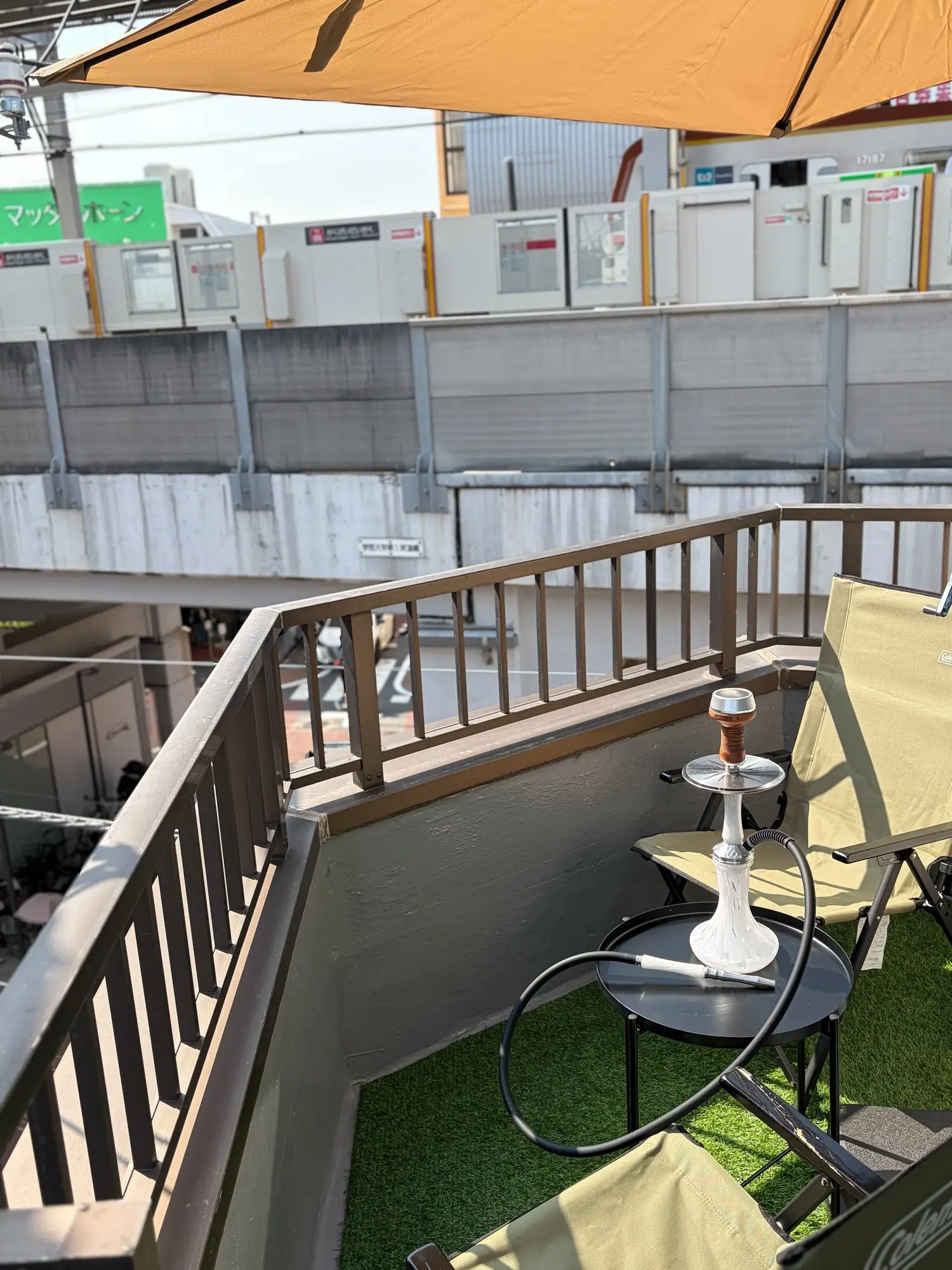
A hookah looks like one object, but it’s really a set of parts working together. Knowing what each one is called and what it does makes it easier to talk to lounge staff, and to understand why the smoke is thin one day and harsh the next.
This guide walks through the parts of a hookah from top to bottom, explains how the smoke flows through them, and covers the main types of bowl and hose, based on manufacturers’ official information and a Japanese specialist publication.
The basic layout
Fumari, a U.S. hookah tobacco maker, divides a hookah into four general parts: the bowl, the stem, the base (or vase) and the hose. Japan Shisha Times, a Japanese specialist publication, lists the components as the top (bowl), charcoal, pipe (stem), water, base and hose.
From top to bottom, the parts look like this:
| Position | Part | What it does |
|---|---|---|
| Top | Charcoal | The heat source that warms the flavor |
| Heat management device (HMD) or foil | Transfers the charcoal’s heat to the flavor and controls it | |
| Bowl | Holds the flavored tobacco (or nicotine-free mixture) | |
| Grommets | Rubber seals that stop air leaking at the joints | |
| Tray | A plate under the bowl | |
| Middle | Stem | The central column linking the bowl to the base |
| Downstem | The tube running from the stem down into the water | |
| Diffuser | Breaks up the bubbles in the water (on some models) | |
| Bottom | Base (vase) | Holds the water |
| Purge valve | Lets stale smoke out of the base | |
| Side | Hose and mouthpiece | The tube and tip you inhale through |
For where the water pipe came from, see The History of Hookah.
How the smoke flows
The U.S. Food and Drug Administration (FDA) describes a hookah as a device that passes heated air through the tobacco mixture and ultimately through a water-filled chamber. When you draw on the hose:
- Air is pulled out of the base.
- Air heated by the charcoal passes through the flavor in the bowl and becomes smoke.
- The smoke travels down the stem and downstem and bubbles through the water.
- It collects in the top of the base.
- It travels up the hose to your mouth.
The U.S. Centers for Disease Control and Prevention (CDC) states that the water in a hookah does not filter the smoke. Passing through water doesn’t remove the harmful substances.
Each part in more detail
Bowl
The bowl holds the flavor, with the charcoal on top. There are two main designs:
- Egyptian: several holes in the base. Fumari says this suits drier, traditional tobacco.
- Phunnel: a single raised hole in the center. Fumari says it suits juicier modern blends because the juice stays in the bowl, and Kaloud, a hookah accessory maker, says it gives a longer session with less charcoal and makes overpacking less likely.
Bowls come in different materials, including clay, and Fumari sells both clay and phunnel designs.
Heat management device and foil
These transfer the charcoal’s heat to the flavor and control how strong it is.
- Foil: stretched over the bowl, with the coals sitting on top.
- Heat management device: Japan Shisha Times explains that these remove the need for foil and give a cleaner smoke. Kaloud explains that on its Lotus device, taking the lid off gives the least heat, putting the lid on with the vents open gives medium heat, and closing the vents gives the most heat.
Charcoal
The heat source. The main types are coconut (natural) coals and quick-light coals. See Hookah Charcoal Explained for the differences.
Grommets
Rubber seals used at the joints. Fumari says they stop air getting in, and Kaloud explains that ill-fitting grommets cause air leaks, which make the draw weak and the smoke feel thin.
Stem and downstem
The stem is the main column connecting the bowl to the base. The downstem runs from it down into the water; Kaloud describes it as the tube linking bowl and base that carries the smoke through the water.
Diffuser
According to Kaloud, a diffuser divides the airflow from one large bubble into several small ones. On Kaloud’s own products it is built into the downstem.
Base and how much water to use
The base holds the water. Manufacturers give similar guidance on the level:
- Al Fakher: the water should cover the downstem by about 3 cm.
- Kaloud: the downstem should sit about 2–3 cm below the water line. Too much water makes the draw heavy.
Purge valve
A one-way valve that lets stale smoke out of the base. Al Fakher says purging regularly after several puffs stabilizes the temperature and prevents overheating.
Hose and mouthpiece
The hose is the tube you inhale through, and the mouthpiece is the tip at the end. For hygiene, Al Fakher recommends a silicone or disposable hose, and Fumari describes a washable silicone hose as one of the most common upgrades.
Terms you might hear at a lounge
Staff in Japan often use a few part-related words, some of them borrowed from English:
- Top (トップ): the bowl, as Japan Shisha Times also calls it
- HMS / heat management (ヒートマネジメント): the device that holds the coals over the bowl
- Top change (トップ替え): a fresh bowl with a new flavor. Japan Shisha Times notes it is usually cheaper than a new hookah
- Coal change (炭替え): replacing the coals, roughly every 15 to 20 minutes at a lounge, according to Japan Shisha Times
For 40 hookah terms, including Japanese lounge words, see the Hookah Glossary.
How the parts come together at a lounge
At a lounge, you won’t need to assemble anything. According to Japan Shisha Times, the staff prepare the hookah and bring it to your table ready to smoke, then come back to change the coals. Knowing the parts simply helps you describe what’s going on, for example “the smoke is thin” or “it tastes harsh”, so the staff can adjust the right thing.
For setting up a hookah yourself, and the safety points involved, see How to Set Up a Hookah at Home.
Hygiene and shared hoses
Sharing a hose is common, but it has hygiene implications. The FDA warns that people who use a hookah can breathe in bacteria living in the hose, which may transmit infectious diseases from person to person, and the CDC notes that the same mouthpiece is often passed from person to person. If this concerns you, ask whether the venue offers separate mouthpieces, or consider one hookah each.
For sharing rules, charges and etiquette, see Sharing a Hookah.
How the parts affect the taste
The condition of the parts directly affects the smoke:
- Thin smoke: not enough heat, air leaking at a grommet, or too much water.
- Harsh taste: too much heat, the flavor touching the heat source, or overpacking.
For causes and fixes, see How to Smoke Hookah Properly. At a lounge, leave adjustments to the staff.
Safety at a lounge
- Don’t move the hookah yourself. Japan Shisha Times warns that hot coals can fall off or the pipe can tip over.
- Don’t touch the bowl or heat management device. The Tokyo Metropolitan Government warns that the charcoal and the parts in contact with it get extremely hot.
- Don’t pull the hose hard. It can knock the pipe over.
FAQ
Does every lounge use the same equipment?
No. Bowl designs and heat management devices vary. If you’re curious, ask the staff.
Is there anything in the water besides water?
Normally it’s just water. Some lounges offer options that use ice.
Is it safe to share a hose?
The FDA warns that bacteria in the hose may spread infections. If you’re concerned, ask about separate mouthpieces or order one hookah each.
What’s the difference between foil and a heat management device?
Both sit between the coals and the flavor. Foil is stretched over the bowl with the coals on top, while a heat management device holds the coals above the bowl. Japan Shisha Times says a heat management device removes the need for foil and gives a cleaner smoke, and Kaloud says its Lotus lets you control the heat precisely with the lid and vents.
Why does a diffuser matter?
According to Kaloud, it breaks one large bubble into several small ones as the smoke passes through the water.
Summary
- A hookah has four main parts: bowl, stem, base and hose.
- Smoke flows from charcoal through the flavor, down the stem, through the water and up the hose.
- The main bowl types are Egyptian and phunnel; heat is managed with foil or a heat management device.
- The downstem should sit about 2–3 cm below the water line.
- At a lounge, don’t move or touch the equipment; let the staff handle it.
For the basics, see What Is Hookah (Shisha)? A Beginner’s Guide to Trying It in Japan.
How it works at shisha bar IORI (Gakugei-daigaku, Tokyo)
- Our staff prepare and manage the equipment and change the coals. If the smoke or taste seems off, just let us know
- We ventilate the room thoroughly and check indoor carbon monoxide levels regularly with a CO monitor
- Ages 20+ only
References
- Japan Shisha Times, shisha basics (Japanese)
- Japan Shisha Times, heat management (Japanese)
- Japan Shisha Times, guide to enjoying a shisha café (Japanese)
- Japan Shisha Times, shisha etiquette (Japanese)
- Fumari, “How to Set Up a Hookah”
- Fumari, “Egyptian Hookah Bowls vs Phunnel”
- Kaloud, “How to Set Up a Hookah for Consistent Heat, Airflow and Performance”
- Kaloud, “Hookah Diffuser”
- Kaloud, “How to Use the Kaloud Lotus I+”
- Kaloud, “Egyptian vs Phunnel Bowl”
- Al Fakher, “Build Your Shisha”
- U.S. Food and Drug Administration, “Hookah Tobacco (Shisha or Waterpipe Tobacco)”
- Centers for Disease Control and Prevention, “Hookahs”
- Tokyo Metropolitan Government consumer test on waterpipes (Japanese)