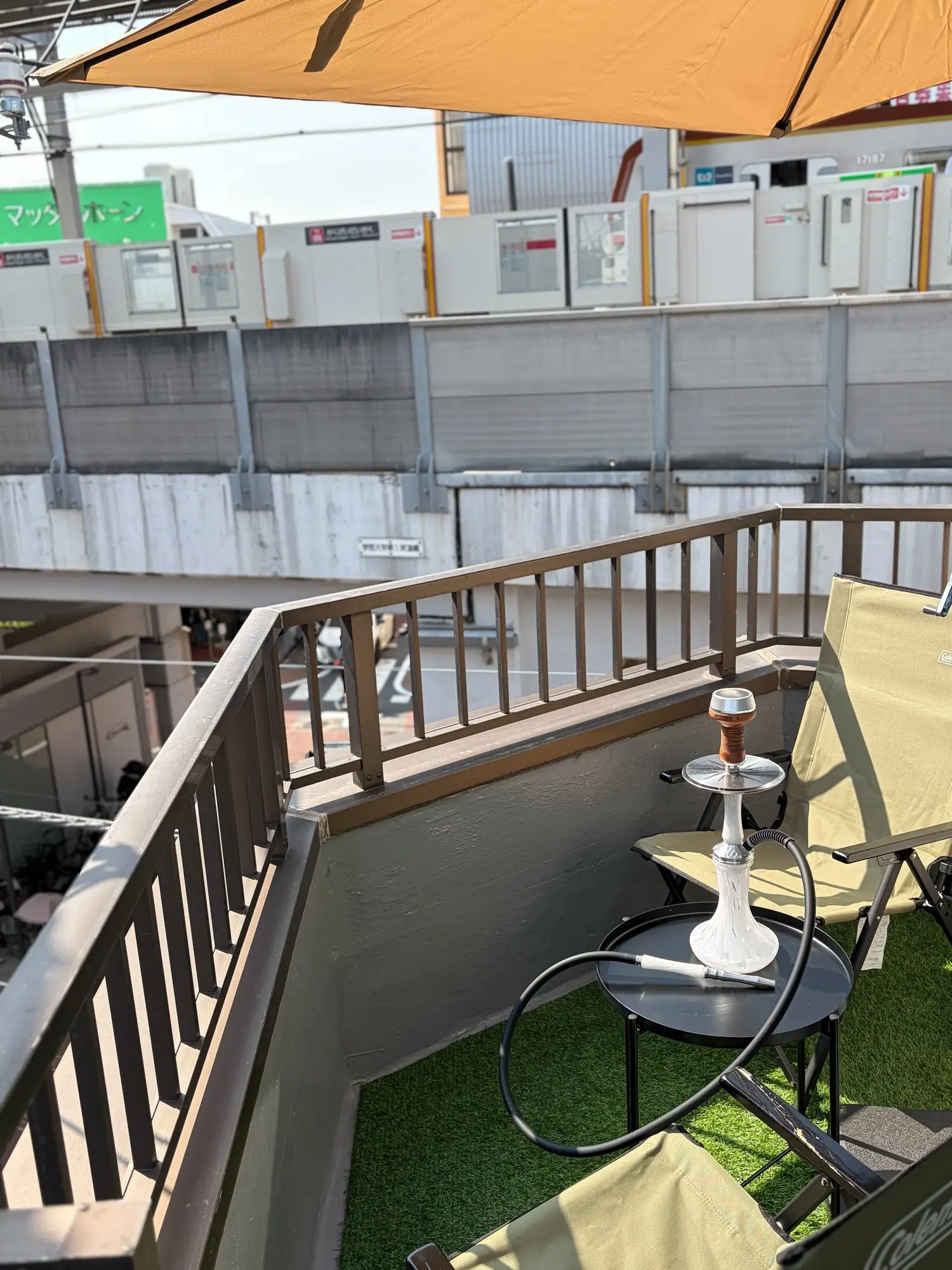
The charcoal sitting on top of the bowl does more to shape a hookah session than almost anything else. Too little heat and the smoke is thin; too much and it turns harsh. And the charcoal is also where most of hookah’s carbon monoxide comes from.
This guide explains the main types of hookah charcoal, how they are lit, how many to use, when coals are changed, and the safety points to know, based on manufacturers’ official information, published research and public agencies.
What the charcoal does
A hookah works by heating flavored tobacco (or a nicotine-free substitute) in the bowl with charcoal, then drawing the smoke down through water and up the hose. The charcoal is the heat source, so managing it is central to how the hookah tastes. For how the whole pipe fits together, see What Is Hookah (Shisha)? A Beginner’s Guide to Trying It in Japan.
For each part and what it does, see Parts of a Hookah.
The two main types: coconut and quick-light
Hookah coals come in two main types. Kaloud, a U.S. maker of hookah accessories, and Fumari, a U.S. hookah tobacco maker, describe them as follows:
| Coconut (natural) coals | Quick-light coals | |
|---|---|---|
| Made from | Coconut shells | Charcoal saturated with an accelerant (often nitrate-based, according to Kaloud) |
| How to light | On an electric burner, coil stove or similar | Lit directly |
| Time to light | About 10–15 minutes (Kaloud); about 8–12 minutes (Fumari) | Under 60 seconds (Kaloud) |
| Ash | Low and dense (Kaloud) | Higher and looser (Kaloud) |
| Effect on taste | — | The accelerant can carry into early puffs (Kaloud); Fumari mentions harsh taste and short heat duration |
Japan Shisha Times, a Japanese specialist publication, describes heating flat natural coals on an electric heater in its guide to home hookah.
How natural coals are lit
Manufacturers and Japan Shisha Times describe the process in similar terms:
- Fumari: place the coals on a burner on its highest setting, flip them when they are half lit, and make sure they are fully lit before taking them off.
- Al Fakher: wait until the coals turn completely red, with no black spots.
- Japan Shisha Times: heat them on an electric heater, turn them over partway, and they’re ready when every surface is glowing red.
The common thread: heat them all the way through, until they’re red all over.
How many coals?
Fumari suggests four coals when using foil and three to four with a heat management device. Japan Shisha Times describes adjusting heat with around 1.5 to 3 coals depending on the type of heat management device.
Coals and heat management devices
How the coals sit on the bowl matters as much as how many there are.
- Foil: coals sit directly on perforated foil stretched over the bowl.
- Heat management devices: Japan Shisha Times explains that these remove the need for foil and give a cleaner smoke. With lotus-style devices, heat is adjusted by the number of coals (around 1.5 to 3); with other designs, it is adjusted with a lid.
- Kaloud Lotus: Kaloud explains that taking the lid off gives the least heat, putting the lid on with the vents open gives medium heat, and closing the vents gives the most heat.
Coals and bowl type
Bowl design also affects how much charcoal is needed. Kaloud says a phunnel bowl, with a single raised hole in the center, can give a longer session with less charcoal than a traditional Egyptian bowl.
When coals are changed
Coals burn down over time and give off less heat.
- At a lounge: according to Japan Shisha Times, staff usually change the coals roughly every 15 to 20 minutes, and coal changes are usually free.
- The signal to change: Kaloud recommends using thinning smoke, rather than the clock, as the cue, and rotating coals one at a time instead of replacing them all at once.
At a lounge, don’t move the coals yourself; tell the staff when the smoke thins. For technique, see How to Smoke Hookah Properly.
Signs the heat is wrong
- Thin or weak smoke: Kaloud explains that too little heat produces thin smoke, and the coals may simply be burning out. It also warns that an air leak can make the smoke feel weak, which tempts people to add coals and scorch the bowl.
- Harsh or burnt taste: Fumari says too many coals on the bowl is a sure way to burn the tobacco, and recommends removing or repositioning a coal to pull the heat back.
In both cases, at a lounge, the answer is the same: tell the staff rather than adjusting the coals yourself.
Most of the carbon monoxide comes from the charcoal
When it comes to health, the charcoal matters a great deal.
- Research (Monzer et al., 2008): about 90% of the carbon monoxide, and 75–92% of certain cancer-linked polycyclic aromatic hydrocarbons (PAHs), in hookah smoke came from the charcoal.
- Research (Sepetdjian et al., 2010): PAH residues already present in the unburned charcoal can account for more than half of the PAHs emitted.
- The UK’s National Centre for Smoking Cessation and Training (NCSCT): notes that “natural” coals, such as those made from coconuts, also produce significant levels of carcinogenic PAHs.
So whether the flavor is nicotine-free and whether the coals are natural, burning charcoal still produces carbon monoxide and other harmful substances.
Closed rooms make it worse
The Tokyo Metropolitan Government tested one hookah in a closed space of about 10 square meters. Carbon monoxide reached about 300 ppm, a level that can cause headaches and nausea within one to two hours, and smoke taken straight from the hose measured more than 10,000 ppm. Opening the door to ventilate brought the concentration down sharply.
Tokyo warns that in a closed space, not only the smoker but everyone nearby is at risk of carbon monoxide poisoning, and stresses the importance of ventilation.
At a lounge vs at home
At a lounge, the staff light, place and change the coals, and the venue is responsible for ventilation. At home, all of that is up to you: lighting the coals fully, handling them safely, ventilating the room, and having a carbon monoxide alarm. The CDC’s advice never to burn charcoal indoors, and Tokyo’s test results, are worth taking seriously before trying hookah at home. If you’re not confident about ventilation and CO safety, a well-run lounge is the safer choice.
Thinking of smoking at home? Read How to Set Up a Hookah at Home first, especially the carbon monoxide section.
Safety around charcoal
- Don’t touch the coals or nearby parts. The Tokyo Metropolitan Government notes that the charcoal and the parts in contact with it get extremely hot. Japan Shisha Times warns about the risk of charcoal at around 700°C falling, and says not to move the coals yourself.
- Don’t knock the pipe over. Tokyo warns that if the pipe tips over and the charcoal falls, it can start a fire.
- Ventilate when burning charcoal indoors. The U.S. Centers for Disease Control and Prevention (CDC) advises never burning charcoal indoors, to prevent carbon monoxide poisoning.
- A CO alarm helps. The Tokyo Fire Department says a carbon monoxide alarm is effective for early detection, and the CDC recommends installing battery-operated or battery back-up CO detectors.
FAQ
Which coals taste better?
It depends on the flavor and personal preference, but Fumari points to harsh taste and short heat duration with quick-light coals. At a lounge, the staff manage the coals, so ask if something tastes off.
Are natural coals safe?
No. The NCSCT notes that natural coals also produce significant levels of carcinogenic substances, and carbon monoxide comes from the charcoal too.
Can I keep smoking while the staff change the coals?
It’s good etiquette to wait until they’ve finished.
Why do staff swap coals one at a time?
Kaloud recommends rotating coals one at a time rather than replacing them all at once, as part of its advice on making a session last longer without burning the flavor.
Why does my hookah get harsh after a while?
Heat builds up. Kaloud notes that hard, repeated draws make the temperature spike faster. Slow down and let the staff adjust the coals.
Summary
- The two main types are coconut (natural) coals and quick-light coals.
- Natural coals take around 10 minutes to light and should be glowing red all over.
- At a lounge, staff change the coals roughly every 15 to 20 minutes.
- About 90% of hookah’s carbon monoxide comes from the charcoal, and natural coals still produce harmful substances.
- Never touch the coals or hot parts, and make sure indoor spaces are ventilated.
If you feel unwell, see Feeling Sick After Hookah?, which includes how to call 119 in Japan.
How it works at shisha bar IORI (Gakugei-daigaku, Tokyo)
- Our staff handle the coals and coal changes. If the smoke is thin or harsh, just let us know
- We ventilate the room thoroughly and check indoor carbon monoxide levels regularly with a CO monitor
- Ages 20+ only
References
- Kaloud, “Best Hookah Charcoal: Coconut vs Quick-Light”
- Kaloud, “How to Use the Kaloud Lotus I+”
- Kaloud, “Egyptian vs Phunnel Bowl”
- Kaloud, “How to Make Your Hookah Session Last Longer Without Burning Flavor”
- Fumari, “Hookah Coal Buying Guide”
- Fumari, “How to Prevent a Harsh Hookah”
- Kaloud, “Why Does My Hookah Taste Harsh? 7 Causes and Fixes”
- Fumari, “How to Set Up a Hookah”
- Al Fakher, “Build Your Shisha”
- Japan Shisha Times, home hookah basics (Japanese)
- Japan Shisha Times, heat management (Japanese)
- Japan Shisha Times, guide to enjoying a shisha café (Japanese)
- Monzer B, et al. Food and Chemical Toxicology, 2008
- Sepetdjian E, et al. 2010
- NCSCT, “Waterpipe tobacco smoking: briefing”
- Tokyo Metropolitan Government press release, March 2025 (Japanese)
- Tokyo Metropolitan Government consumer test on waterpipes (Japanese)
- Tokyo Fire Department, carbon monoxide poisoning (Japanese)
- Centers for Disease Control and Prevention, “Carbon Monoxide Poisoning Basics”