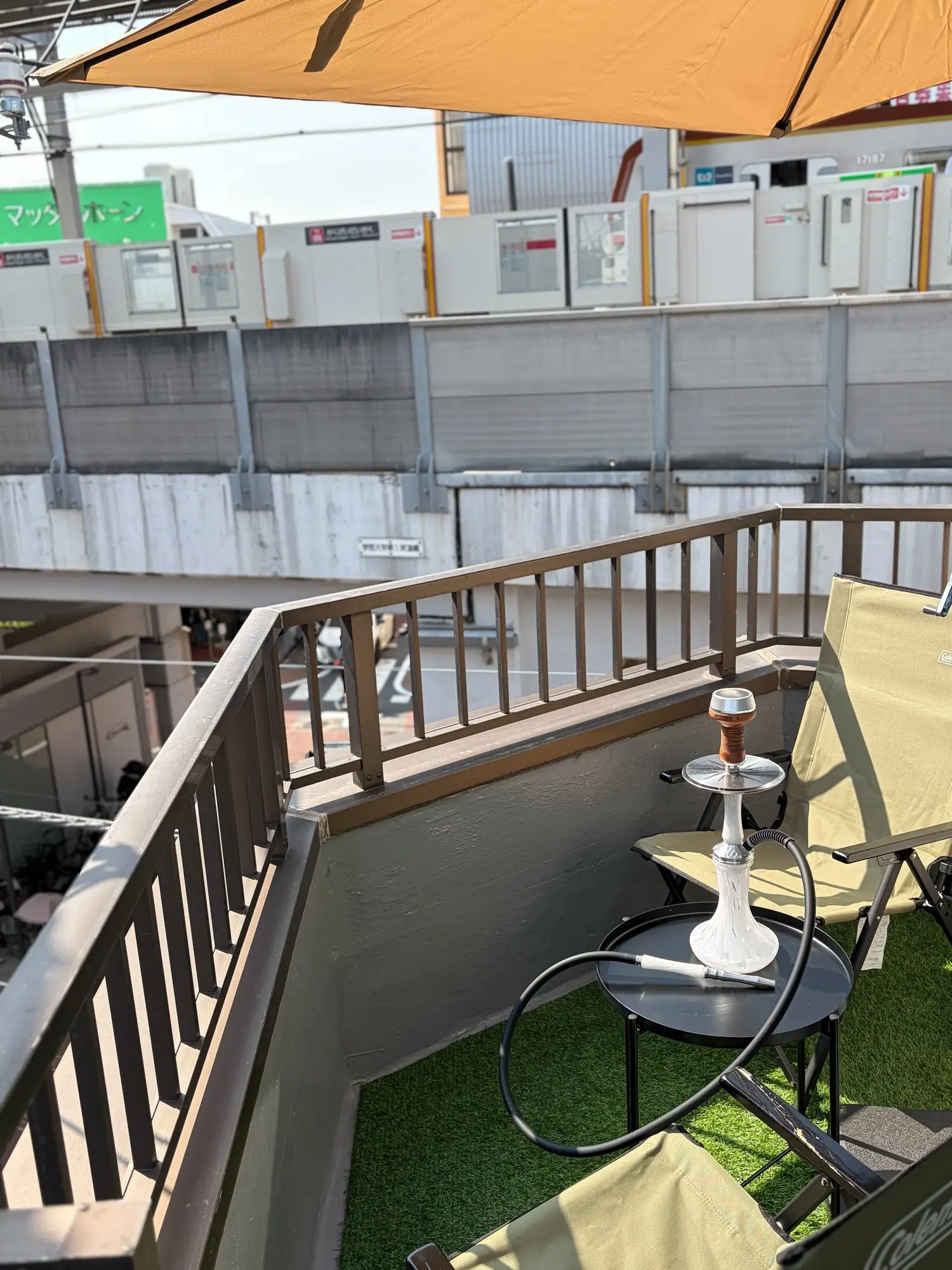
“Is hookah worse than cigarettes?” “Is it basically the same as vaping?” “Does heated tobacco count as smoking in Japan?” Hookah, cigarettes, heated tobacco and e-cigarettes are all things people inhale, but they work in different ways, are treated differently under Japanese law, and carry different kinds of risk. Knowing the differences helps you make sense of the rules you’ll see in Japan, from tax categories to the different kinds of smoking room.
This guide compares them using information from Japan’s National Tax Agency and Ministry of Health, Labour and Welfare, the U.S. Centers for Disease Control and Prevention (CDC) and other public bodies. It is general information, not medical advice; if you have health concerns, talk to a doctor.
At a glance
| Cigarettes | Heated tobacco | E-cigarettes (vapes) | Hookah (shisha) | |
|---|---|---|---|---|
| How it works | Tobacco leaf is burned | Tobacco is heated without burning | A flavored liquid is heated electrically and the vapor inhaled | Tobacco (or a substitute) is heated by charcoal and the smoke drawn through water |
| Heat source | Flame | Electricity | Electricity | Charcoal |
| Nicotine | Yes | Yes | In Japan, nicotine liquids require approval to be sold | Yes, except nicotine-free flavors |
How each one works
Cigarettes
Tobacco leaf is rolled in paper, lit, and the smoke from the burning tobacco is inhaled.
Heated tobacco
Tobacco is heated electrically rather than burned. According to the Ministry of Health, Labour and Welfare’s e-healthnet, there are high-temperature types that heat to 200°C or more and low-temperature types that use vapor at around 30–40°C. Heated tobacco has been sold in Japan since 2016.
E-cigarettes (vapes)
e-healthnet describes e-cigarettes as products that electrically heat a solution containing flavorings and other ingredients, producing an aerosol (vapor) that is inhaled. Unlike heated tobacco, they don’t use tobacco leaf.
Products sold as “e-hookah” or “electronic shisha” are covered in E-Hookah vs Hookah.
Hookah (shisha)
Japan’s National Tax Agency describes water-pipe tobacco as tobacco (or a product containing tobacco) that is burned or heated, with the tobacco’s components inhaled through a water pipe. Hookah uses charcoal as its heat source and draws the smoke through water before it reaches the hose. For the full picture, see What Is Hookah (Shisha)? A Beginner’s Guide to Trying It in Japan.
How Japanese law treats them
Tax law: hookah is not “heated tobacco”
According to the National Tax Agency, heated tobacco used to be classed as pipe tobacco under Japan’s tobacco tax law, until the 2018 tax reform created a separate heated-tobacco category (in force from 1 October 2018).
In defining heated tobacco as tobacco that is heated rather than burned, the Tax Agency specifically excludes tobacco made for smoking in a water pipe. Hookah tobacco is therefore not heated tobacco under Japanese law.
E-cigarettes: nicotine liquids are regulated as medicines
According to e-healthnet, selling liquids that contain nicotine requires approval in Japan under the Act on Pharmaceuticals and Medical Devices. In 2010 the Ministry of Health, Labour and Welfare issued a notice saying that selling e-cigarettes containing nicotine was suspected to violate the law as the sale of unapproved medicines. Nicotine-free e-cigarettes, on the other hand, are not classed as tobacco products under the Tobacco Business Act.
The Health Promotion Act: different kinds of smoking room
Japan’s Health Promotion Act, fully in force since April 2020, sets out several kinds of smoking room, according to the Ministry of Health, Labour and Welfare:
- Smoking room: smoking is allowed, but not eating or drinking.
- Heated-tobacco-only smoking room: only heated tobacco may be used, and food, drink and other services can be provided.
- Smoking-purpose room: set up in a facility whose purpose is smoking; staple meals cannot be served.
Entry by anyone under 20 is prohibited in every type of smoking room, and this applies to staff as well as customers. See Hookah Age Limit in Japan for details.
What this means at a hookah bar is covered in Can You Smoke Cigarettes at a Hookah Bar in Japan?.
What health agencies say
Public health agencies do not describe any of these products as safe.
Hookah
- The water does not filter the smoke (CDC).
- The charcoal can produce high levels of carbon monoxide, metals and cancer-causing chemicals (CDC).
- In a typical hour-long session, a user inhales about 90,000 ml of smoke, 100 to 200 times the volume of a single cigarette, and is exposed to nearly nine times the carbon monoxide and 1.7 times the nicotine of one cigarette (CDC).
- The same mouthpiece may be passed from person to person, which carries a risk of infection (CDC).
Heated tobacco
- Japan’s National Cancer Center says heated tobacco smoke contains harmful substances such as nicotine and carcinogens, and that there is concern about its health effects.
- A Ministry of Health, Labour and Welfare document notes that some products contain as much nicotine as cigarettes.
- e-healthnet says it is not clear how far heated tobacco reduces the risk of disease, and that people nearby have been reported to be exposed to harmful chemicals.
E-cigarettes
- e-healthnet notes reports that some e-cigarettes, with or without nicotine, produce carcinogens such as formaldehyde and acetaldehyde.
- The CDC says most e-cigarettes contain nicotine, which is highly addictive, and that no tobacco products, including e-cigarettes, are safe.
Nicotine and dependence
All the tobacco-based products here deliver nicotine. The CDC describes nicotine as highly addictive, the U.S. Food and Drug Administration (FDA) notes that hookah delivers the addictive drug nicotine, and the WHO Regional Office for the Eastern Mediterranean states that waterpipe tobacco is highly addictive. The CDC’s figures suggest a single hookah session can deliver more nicotine than one cigarette.
For hookah and dependence in more detail, see Is Hookah Addictive?.
Secondhand exposure
- Hookah: the CDC says secondhand hookah smoke contains smoke from the tobacco as well as from the heat source, such as charcoal.
- Heated tobacco: e-healthnet notes reports that people nearby are exposed to harmful chemicals, and the Ministry of Health, Labour and Welfare says it is difficult to predict the long-term health effects of secondhand exposure.
Pregnancy
The CDC reports that babies born to people who use hookah are at increased risk of respiratory diseases, and the WHO Regional Office for the Eastern Mediterranean notes that use or secondhand exposure can also have adverse effects during pregnancy.
“The water makes hookah cleaner”
This is one of the most common myths. The CDC states plainly that the water in a hookah does not filter the smoke, and hookah’s heat source, charcoal, adds carbon monoxide and other toxicants of its own. A water pipe is not a filter. If anything, the long session and the charcoal are what set hookah apart from the other products in this guide.
A note on comparisons
Because these products work so differently, and are used in such different ways and for such different lengths of time, you can’t simply rank them from safest to most dangerous. Hookah comparisons such as “one session equals X cigarettes” also depend heavily on how they were measured. See Is Hookah Dangerous? Risks, Myths and How to Reduce Them for more.
How much nicotine is in flavored hookah?
There is no single figure. Unless it is a nicotine-free (herbal) product, hookah tobacco contains nicotine, and the amount you take in depends on the tobacco, how long the session lasts and how you smoke. The figures published by public bodies are:
- CDC: in a typical hour-long session, a user is exposed to about 1.7 times the nicotine of one cigarette.
- WHO Regional Office for the Eastern Mediterranean: one bowl of unflavored tobacco has the nicotine equivalent of 2 to 12 cigarettes. This figure is for unflavored tobacco, so the sweet flavored tobacco most lounges serve may differ.
- NCSCT (UK): people who use a waterpipe daily can take in nicotine equivalent to up to ten cigarettes.
The NCSCT also explains that it is hard to measure waterpipe smoke under consistent conditions, because breathing patterns, the size of the waterpipe and the materials used all vary, and that the smoke differs from flavor to flavor. Treat these numbers as a sign that exposure can be high, not as an exact conversion. For flavors without nicotine, see Nicotine-Free Shisha in Tokyo, and for the wider picture, Is Hookah Dangerous?.
FAQ
Is hookah a type of heated tobacco?
No. Japan’s National Tax Agency excludes tobacco made for smoking in a water pipe from its definition of heated tobacco.
Is hookah the same as vaping?
No. Vapes heat a liquid electrically. Hookah heats tobacco (or a substitute) with charcoal and draws the smoke through water.
Is nicotine-free hookah the same as a nicotine-free vape?
No. Nicotine-free hookah still uses charcoal, so it still produces carbon monoxide (CDC). See What Is Nicotine-Free (Herbal) Shisha?.
Can hookah be smoked in a heated-tobacco-only room?
Heated-tobacco-only smoking rooms are for heated tobacco alone, according to the Ministry of Health, Labour and Welfare, and Japan’s tax law excludes water-pipe tobacco from the heated-tobacco category. Hookah venues use other types of smoking area.
Can I vape inside a hookah lounge?
Rules vary from venue to venue, so ask the staff before you use any other product.
Is hookah worse than cigarettes?
Public agencies don’t describe either as safe. The CDC’s figures show a single hookah session involves far more smoke and carbon monoxide than one cigarette, but direct comparisons depend on how often and how long people smoke.
Summary
- Cigarettes burn tobacco, heated tobacco heats it electrically, vapes heat a liquid, and hookah heats tobacco with charcoal and draws the smoke through water.
- Under Japan’s tobacco tax law, hookah tobacco is excluded from the heated-tobacco category.
- In Japan, nicotine vape liquids require approval to be sold.
- Health agencies describe none of these as safe; with hookah, carbon monoxide from the charcoal is a particular concern.
- Under-20s may not use any of them, or enter any kind of smoking room.
- Water does not filter hookah smoke, and secondhand hookah smoke includes smoke from the charcoal.
How it works at shisha bar IORI (Gakugei-daigaku, Tokyo)
- 36 nicotine-free flavors are available for guests who want to avoid nicotine
- We ventilate the room thoroughly and check indoor carbon monoxide levels regularly with a CO monitor
- Heated tobacco (e.g. IQOS) and e-cigarettes may be used indoors; paper cigarettes are terrace only
- Ages 20+ only
References
- National Tax Agency, 2018 tobacco tax reform (Japanese)
- Ministry of Finance, tobacco tax categories (Japanese)
- Ministry of Health, Labour and Welfare, e-healthnet: e-cigarettes (Japanese)
- Ministry of Health, Labour and Welfare, e-healthnet fact sheet: heated tobacco (Japanese)
- Ministry of Health, Labour and Welfare, scientific findings on heated tobacco (Japanese)
- Ministry of Health, Labour and Welfare, notice on nicotine e-cigarettes, 2010 (Japanese)
- National Cancer Center Japan, cancer information service: tobacco (Japanese)
- Ministry of Health, Labour and Welfare, types of smoking room (Japanese)
- Centers for Disease Control and Prevention, “Hookahs”
- Centers for Disease Control and Prevention, “Health Effects of Vaping”
- U.S. Food and Drug Administration, “Hookah Tobacco (Shisha or Waterpipe Tobacco)”
- WHO Regional Office for the Eastern Mediterranean, waterpipe tobacco smoking fact sheet
- NCSCT, “Waterpipe tobacco smoking: briefing”
- Japanese Law Translation, “Health Promotion Act” (official English translation)