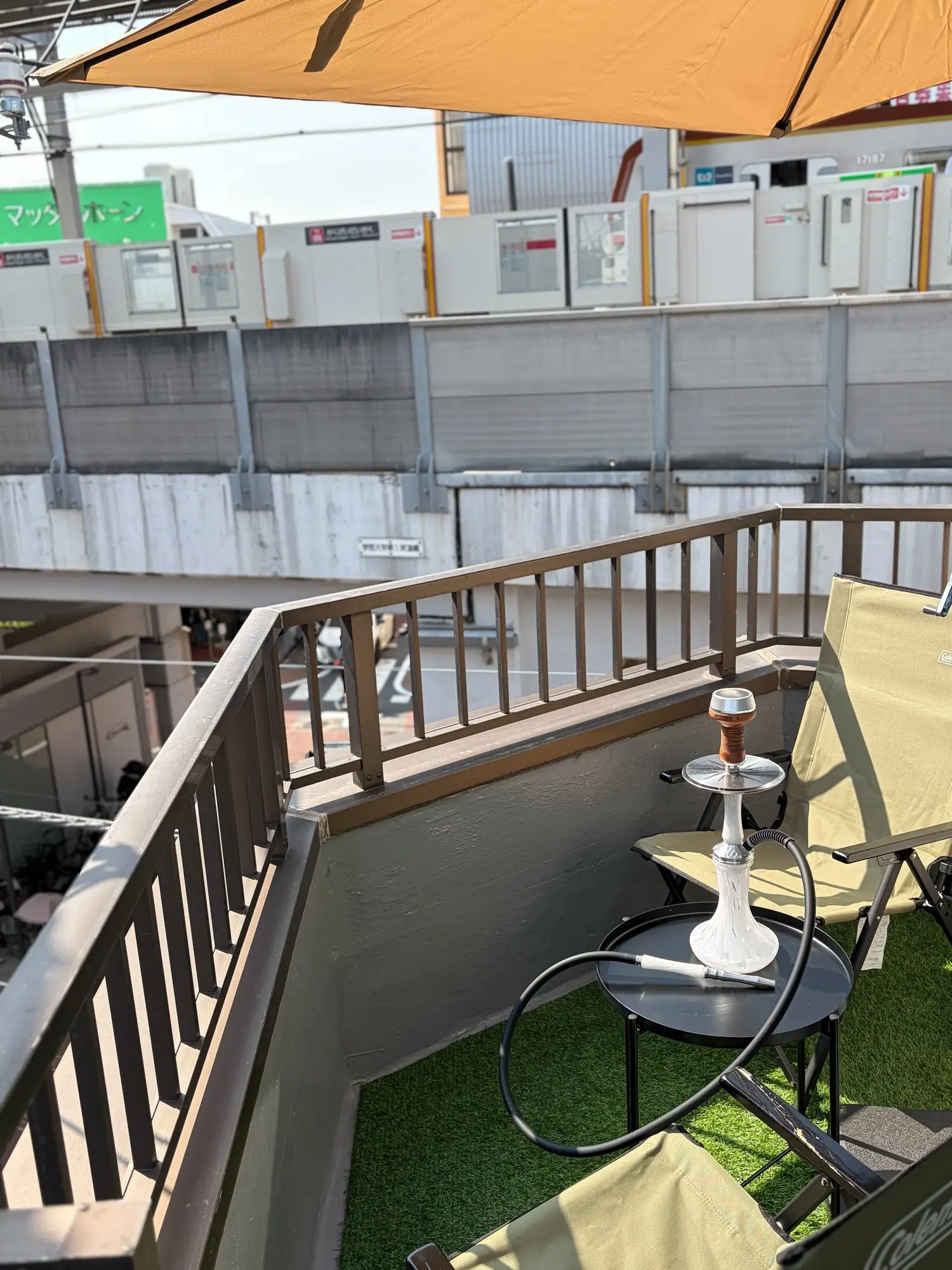
“I’d like to try hookah, but I don’t want nicotine.” If that sounds like you, nicotine-free shisha is the obvious place to look. But what is it actually made of, and what changes when you take the tobacco out? This guide covers the main types of nicotine-free shisha, how they compare with regular shisha, what the research says about their risks, and the rules that apply in Japan, using manufacturers’ official information, public health agencies and peer-reviewed studies.
What is nicotine-free shisha?
Nicotine-free shisha is shisha made without tobacco leaf, so it contains no nicotine. You will also see it called “herbal shisha” or “herbal molasses.”
Regular shisha is a mixture of tobacco, sweeteners and flavoring, according to the U.S. Food and Drug Administration (FDA). Nicotine-free products keep the sweeteners and flavoring but replace the tobacco with something else. Everything else stays the same: the mixture sits in a bowl, charcoal heats it, and the smoke is drawn through water and inhaled through a hose.
What is it made of? The main types
Herbal molasses (plant-fiber base)
The most common type soaks plant fiber in glycerin, sweeteners and flavorings. It looks and handles much like regular shisha, so it can be packed into the same bowls and used on the same pipes.
- Hydro Herbal describes its product on its official site as “a glycerin and natural-fiber blend infused with food-grade flavor oils,” with “0% nicotine.”
- Soex, a manufacturer based in India, describes its range as “100% tobacco-free, nicotine-free, and tar-free herbal hookah molasses.”
Sugarcane fiber is often mentioned as a base material for this type of product, but neither brand publishes a detailed ingredient breakdown on its official site.
Steam stones (mineral base)
Instead of plant fiber, this type uses small porous stones soaked in a flavored liquid. The German brand Shiazo presents its steam stones as a product whose fine pores hold the flavor. The stones are heated in the bowl in the same way as a regular mixture.
Check the label, not the brand
Even well-known brands may not make a nicotine-free line, and what is sold can differ from country to country or from one retailer to another. Rather than going by the brand name, check the label on the product itself for wording such as “tobacco-free” or “0% nicotine.”
How it compares with regular shisha
| Regular shisha | Nicotine-free shisha | |
|---|---|---|
| Main ingredients | Tobacco leaf + sweeteners and flavoring | Plant fiber or stones + glycerin and flavoring |
| Nicotine | Yes | No |
| Charcoal and smoke | Yes | Yes |
| Carbon monoxide | Produced | Produced |
| How it’s smoked | Heated with charcoal, drawn through water | The same |
The research backs this up. A 2012 study that reproduced the puffing patterns of 31 hookah smokers compared tobacco-based and tobacco-free products. It found that carbon monoxide, polycyclic aromatic hydrocarbons, aldehydes and “tar” were all substantial with both products, and that nicotine was the only toxicant that differed significantly between them (Shihadeh et al., 2012).
For how hookah compares with cigarettes, heated tobacco and vapes, see Hookah vs Cigarettes, Heated Tobacco and Vapes.
“Nicotine-free” doesn’t mean “harmless”
With nicotine-free shisha, you are still burning charcoal and inhaling smoke. Four facts are worth knowing:
- The smoke contains toxicants either way. The U.S. Centers for Disease Control and Prevention (CDC) states that smoke from both tobacco and “herbal” shisha contains carbon monoxide and other toxic agents. The charcoal itself can produce high levels of carbon monoxide, metals and cancer-causing chemicals, and the water in a hookah does not filter the smoke.
- Nicotine is the main difference. As the 2012 study above found, tobacco-free products still produce substantial carbon monoxide and tar (Shihadeh et al., 2012).
- Some herbal products have tested high for metals. One study found high levels of metals such as lead and arsenic in some herbal products, and toxic by-products in their smoke at levels equal to or greater than those of tobacco shisha (Hammal et al., 2015).
- Carbon monoxide poisoning is a real risk. In March 2025 the Tokyo Metropolitan Government warned about carbon monoxide poisoning at hookah venues and stressed the importance of ventilation.
Avoiding nicotine and avoiding harm are two different things. If you get a headache, feel nauseous or dizzy, stop at once and get some fresh air. For the wider picture, read Is Hookah Dangerous? Risks, Myths and How to Reduce Them.
The rules in Japan: 20+ only, even for nicotine-free
Japan’s Health Promotion Act, fully in force since April 2020, restricts who may enter smoking areas. In the government’s official English translation, Article 33 says the manager of a facility with a smoking room “must not allow persons under 20 years of age to enter the smoking room,” and Article 35 applies the same rule to smoking lounges.
The same law defines “tobacco” to include not only manufactured tobacco but also “a manufactured tobacco substitute,” and “smoking” as lighting or heating tobacco to generate smoke or vapor for inhalation.
In practice, hookah is smoked in a smoking area, so under-20s cannot join a hookah session in Japan, even if they choose a nicotine-free flavor or order only a soft drink. Carry photo ID; for visitors, a passport is the safest choice.
Who it suits, and who should think twice
It may suit you if you
- want to avoid nicotine;
- don’t smoke but would like to experience the flavors and atmosphere of a hookah session.
Think carefully if you
- want to avoid smoke or carbon monoxide altogether. Nicotine-free shisha still produces both.
- are pregnant. The CDC reports that babies born to women who used a hookah daily during pregnancy weighed less at birth and were more likely to have respiratory problems.
- have heart or lung concerns. The FDA links hookah use to increased heart rate and blood pressure and reduced lung function. If you are unsure, talk to a doctor.
If you take the pill, see also Hookah and Birth Control.
How to choose
- Read the label. Look for “tobacco-free” or “0% nicotine” on the specific product.
- Pick a well-ventilated place. The Tokyo Metropolitan Government stresses ventilation to prevent carbon monoxide poisoning.
- Put how you feel first. Avoid smoking on an empty stomach or when you feel unwell, and stop as soon as something feels off.
Before you go: a quick checklist
- Check everyone’s age. In Japan, anyone under 20 will be turned away from the smoking area, whichever flavor they want.
- Bring photo ID. For visitors, a passport is the most reliable option.
- Check the menu. Look for how nicotine-free flavors are marked and whether they are priced the same as regular shisha, as this varies from lounge to lounge.
- Allow about an hour. The CDC describes a typical hookah session as lasting around an hour, and nicotine-free shisha is smoked in exactly the same way.
- Ask the staff. If you are unsure which flavors are nicotine-free, ask before you order.
FAQ
Is nicotine-free shisha fine for someone who doesn’t smoke?
It contains no nicotine, but it still produces smoke and carbon monoxide. Take it slowly and stop if you feel unwell.
Doesn’t the water clean the smoke?
No. The CDC states that the water in a hookah does not filter the smoke, and that applies to nicotine-free shisha too.
Is nicotine-free shisha cheaper than regular shisha?
Pricing is set by each lounge, so check the menu before you order. The difference in ingredients doesn’t tell you anything about the price.
How long does a nicotine-free session last?
About the same as a regular one. The CDC describes a typical hookah session as lasting around an hour.
Can under-20s have nicotine-free shisha in Japan?
No. Under the Health Promotion Act, under-20s cannot enter smoking areas at all.
Summary
- Nicotine-free shisha replaces tobacco leaf with plant fiber or porous stones.
- It is smoked the same way as regular shisha; the main difference is the absence of nicotine.
- Because it uses charcoal, it still produces smoke and carbon monoxide.
- In Japan, under-20s cannot use it, just as with regular shisha.
- It suits people who want to avoid nicotine, not people who want to avoid smoke.
New to hookah? Start with What Is Hookah (Shisha)? A Beginner’s Guide to Trying It in Japan, and to compare tobacco types, read What Is Dark-Leaf Shisha?.
How it works at shisha bar IORI (Gakugei-daigaku, Tokyo)
- 36 nicotine-free flavors, including Japanese-inspired ones such as yuzu, matcha, sakura and roasted sweet potato
- Same price as regular shisha: ¥2,800 per pipe
- Ages 20+ only, even if you order only nicotine-free shisha or soft drinks
- Cashless payment only
References
- Hydro Herbal (official site)
- Soex, Herbal Molasses (official site)
- Shiazo (official site)
- U.S. Food and Drug Administration, “Hookah Tobacco (Shisha or Waterpipe Tobacco)”
- Centers for Disease Control and Prevention, “Hookahs”
- Shihadeh A, et al. Food and Chemical Toxicology, 2012
- Hammal F, et al. “‘Herbal’ but potentially hazardous,” Tobacco Control, 2015
- Japanese Law Translation, “Health Promotion Act” (official English translation)
- Tokyo Metropolitan Government press release, March 2025 (Japanese)
- Ministry of Health, Labour and Welfare, passive smoking prevention site (Japanese)